
When people ask me about my hobbies, whenever I mention that I play Ocarina, they invariably say things like this:
You mean the thing from Zelda?
Oh cool! ….what are they?
Ocawhatta now?

I expect these answers, so I don’t mind it, but the point is: Ocarinas aren’t well known, at least in America. They’re fairly common in places like Italy (where they were invented), South Korea, Japan, and China, and even used to have a bit of a foothold in America under the name Sweet Potato. There was an American Ocarina Ensemble called the Sweet Potato Tooters, Ocarinas were featured in music for movies like The Wizard of Oz, and they were even used with musicians like Bing Crosby With the intense marketing and growth of the recorder however, the Ocarina fell into obscurity until Japan brought it back.
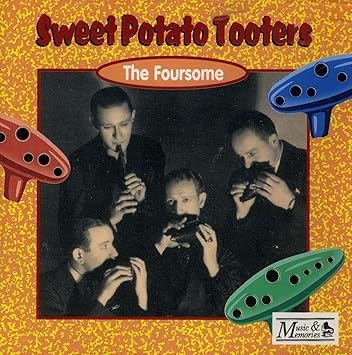
Nomura Sojiro, a Japanese Ocarinist, made the instrument popular in Japan in the mid-80s, which caused it to be featured in many media that found their way to America – including some Anime movies and most famously, The Legend of Zelda: Ocarina of Time. This created awareness for Ocarina in the states, but mostly in nerdy culture and not much outside of that. As of now, there are some American Ocarina companies such as Songbird and STL who make, import, and sell Ocarinas to musicians and collectors in the states. In fact, it was these companies that made me and many others realize that Ocarinas aren’t a fictional instrument invented by the Japanese and actually very real, full of history, and capable of so much beautiful music.

I bought my first Ocarina from STL at Fanime Con 2011, around 7 years ago as of writing this, and since then have amassed a collection of around 25 instruments from various companies (though most come from Songbird). When I started learning how to play, I had a short musical background of playing trumpet in middle school band, which definitely accelerated my learning, but here’s the thing – Ocarinas are easy to learn.
Within a month of obsessive practice during summer break, I surpassed my 4 years of trumpet in terms of confidence on the instrument, and I was trumpet section leader in middle school. I became crazy passionate about these little goose-shaped instruments – fun fact: Ocarina literally translates to Little Goose in Italian because of their shape – and made it a personal mission to educate people about them. My current close friend, but at-the-time Ocarina role model David Ramos already had been doing his part online, so I decided to work locally.
Come 2012, I attend yet another Fanime Con and nervously start playing some songs I know. Lots of people approached asking about the instrument, complimenting my playing, and I even received (without asking) a few tips. I was ecstatic, discovering what I could do with this little instrument and subsequently became even more obsessed with them. Outside of conventions, I’d occasionally bring it to school and play or lurk The Ocarina Network forum.

The next Fanime, having had another year of practice under my belt, I was ready to be a bit more ambitious. I probably spent around 6 hours a day playing music around the con, jammed with various people including members of Super Soul Bros (and was even asked to join the band, but had to decline due to being to young to even drive), and had easily one of the best convention experiences up to that date. At this point, I am starting to realize that Ocarina could be more than a hobby, but don’t act on that thought.
Time goes by, and I gather more Ocarinas, but I practice less and less – until each Fanime. Nothing uber-noteworthy happens in 2014 aside from some fun jams, but in 2015 it heats up.

Remember David Ramos, the YouTuber I mentioned looking up to earlier? Well, in Fanime 2015, he showed up while working for the Songbird booth. You can hear some of his playing at his Ocarina panel as well as some highlights from the con itself in my video-recap of the con on my old YouTube channel.
Back to meeting David – I was browsing the vendor’s hall, doing my routine search to find the Ocarina booth. There’s an anomaly – there are two of them! STL comes every year, but this year Songbird came too! And they had David Ramos working the booth. Needless to say, I was starstruck and asked if he needed any help advertising the booth or anything. He handed me some business cards, and as I galavanted through the con making music, I’d hand that card to curious listeners.

Later that night, he had an Ocarina panel, which you know I went to, and I managed to talk with him for a bit. Apparently, I had built a reputation as the Fanime Ocarina Guy and people asked if he knew me. I didn’t even know I had such a reputation, but it was nice to hear, and it was even nicer to know that my efforts sharing the Ocarina had been successful. After he finished working at the dealer hall one night, he comes out while I’m jamming away and starts playing. My palms got real sweaty, but we played the title theme from The Legend of Zelda: Wind Waker together, one of my favorite songs, and that made my entire con.
Fast forward to early 2016, and David messages me on Twitter asking if I could help at the Songbird booth that year. I immediately accept, and while he himself wasn’t attending that year, I was so excited to actually be giving the Ocarinas to people. Several long workdays at the con come and go, I make some great memories, and I learn the difficulties vendors face at conventions. Sales weren’t great due to the cramped nature of the hall, but I got my foot in the door for something bigger.
Half a year later at the end of 2016, David messages me (on Facebook this time, since we were in a group chat for Fanime where he remotely helped us) and asks if I can read sheet music. I misinterpret the question and think he means sight reading, answer, “yeah, but not well,” which leads to me figuring out what he meant, saying “oh wait, yeah I can do that,” and then…
David invited me to join the United States Ocarina Ensemble.
I give a tentative yes so I can find out more details, but I am wired. This small, obscure instrument I picked up on a whim and had become such a big part of my life was finally taking me somewhere. During summer, 2017, we all come from our different home states to meet for the first time to perform at Anime Expo as a test run. After lots of rehearsal and bonding, we perform around the outside of the convention to a great response, and the seven of us become fast friends.

The test run is an absolute success, we give ourselves the name Ocabanda, and we move forward for our next plan: MAGfest. I have a detailed log of all we did at MAGfest, so I’ll spare the details. In short, we bonded even more, all roomed together for most of it, did some great promotion in the gaming music community, and even recorded an album yet to be released. That weekend (just a month ago as of writing this) was easily one of the best experiences of my life, and it’s just the beginning for Ocabanda.

What was the point of that somewhat self-congratulatory log of my experience with Ocarinas? It’s to show that you can do something with your weird hobbies that nobody else seems to know about or understand.
I practiced Ocarina for 6 years before Ocabanda began, and most of that practice was alone. I had friends who made fun of me for playing Ocarina, an ex who called it my “stupid flute thing,” and not much of a community to work with. It’s really hard, to build a skill by yourself, which is why it’s so important to build your community. My mission from the start with the Ocarina was to spread awareness for the instrument, and in doing so hopefully meet other Ocarinists. I’ve made a few Ocarina friends at Fanime, and because of the people I met playing Ocarina, I’m in a band that travels the country a few times a year.
Yes, there has been a lot of being in the right place at the right time, between happening to choose the Ocarina, happening to meet David, and happening to have made an impression on both him and the people at Fanime – but I unknowingly stacked the deck in my favor. Because I obsessively practiced, I became good enough to be considered for the band. Because I performed around Fanime so much, I built a reputation for building the Ocarina community (and matching David’s mission for Ocabanda). Because I reached out to David when I had the opportunity, I got on his radar in the first place.
I didn’t do any of these things to try and be recruited into a band, but taking steps to be skilled in my niche, build a community, and reach out to others within that niche allowed me to find opportunity in what I thought was just a hobby I was passionate about. There is absolutely no certainty that taking similar steps in a different niche will guarantee that you can move up in that world, but they certainly won’t hurt. You’ll improve your skills, meet like-minded people, and spread your love for your craft at worst, which is still a pretty great outcome.
Whether your passion is underwater-basket-weaving, playing the Xaphoon, or drone racing, you’re not alone. By having no ulterior motives and wanting to get deeper in the Ocarina communities, a I have improved my life. The opportunity to be in a band was icing on the Ocarina-shaped cake, and who knows where that cake will go next.
The point is: get involved with what you’re passionate with, even if it’s just a little bit. You never know what could happen.
-Andy
 Andy Cormier