
I’ve been pretty depressed. I got laid off. And I got COVID. And you know what? I’m doing pretty great now.
You’d think having all this piling up at once would’ve been a lot more difficult, but instead, the opposite happened.
Getting laid off has given me better headspace to work on my mental health. Getting COVID has sucked, but it’s forced me to do a lot of resets with bad habits, and I have a much cleaner slate.
Today’s post is all about resilience, resets, and reinvention. RRR. The best movie of 2022. Okay, not that RRR. But you should watch RRR on Netflix after you read this (as long as you have more than three hours to spare).

Let’s discuss the first R, resilience.
Resilience

Actually, we’ll start with privilege. Lots of people might say “I lost my job, but it turned out to be the best thing that could happen to me as a test of resilience.”
In reality, I’m super privileged. I’ve managed to save up a substantial safety net thanks to living with my parents. Then, thanks to living with my parents, I haven’t worried about losing my income now and can still maintain a pretty comfortable life thanks to my safety net.
I can’t talk about resilience in these things without acknowledging the role privilege and support have had to make them easier.
That said, I have been struggling, and one of the biggest hurdles I have is unreasonable anxiety when it comes to working on YouTube—hence why I’ll often post 1-3 videos then disappear for a few months.
I always had the excuse of “I don’t have the time or energy to keep this up because of work,” and now that I don’t have that excuse due to being laid off, what’s stopping me from making regular content and building something I’m proud of?
It’s a mixture of obviously mental health being down and unwarranted anxiety towards making content, but a lot of it is simply a lack of resilience. There are many areas of my life where there are things that I enjoy but take effort. And simply the idea of expending effort has been unreasonably terrifying.
I don’t want to conflate depression and laziness, as they are very different things, but I am certain that in addition to depression, I would make excuses when there weren’t any good reasons. I’ve felt like I’m always moving but spinning in place and going nowhere, and to improve my resilience to do hard things, I have needed a reset.
And frankly, so do a lot of people right now. We have been resilient dealing with a global pandemic, economic uncertainty, and so many other factors, but the overwhelm these problems have gets multiplied by mental health drains like overuse of social media and poor patterns resulting from that, like fear of missing out, anxiety from being bombarded by all the worst news in the world, worse sleep, doom scrolling, and constant comparisons to others.
Social media is an important and useful tool, yet many of us need to reset ourselves and our relationships with these platforms.
Reset

Many of us know we need a reset to obtain the time and energy we need to achieve our goals, but how? Here’s what I’ve been doing:
Restrict access to distractions.
We have phones, we like our phones, and we browse the internet. I mean, if you’re watching this that’s what you’re doing now. If you asked me to count the number of times I grab my phone and check Twitter, the number of times I unintentionally doomscroll on Shorts or TikTok for an hour or more, I couldn’t tell you. That number would be embarrassingly high if I tracked it.
Thankfully, the biggest offenders when it comes to these time, energy, and mental health sinks can be restricted.
Let’s start with minimizing phone usage. For iPhone users, in settings, you can go to Screen Time then select App Limits. I have one limit for doomscroll apps like Twitter and TikTok, and one primarily for YouTube.
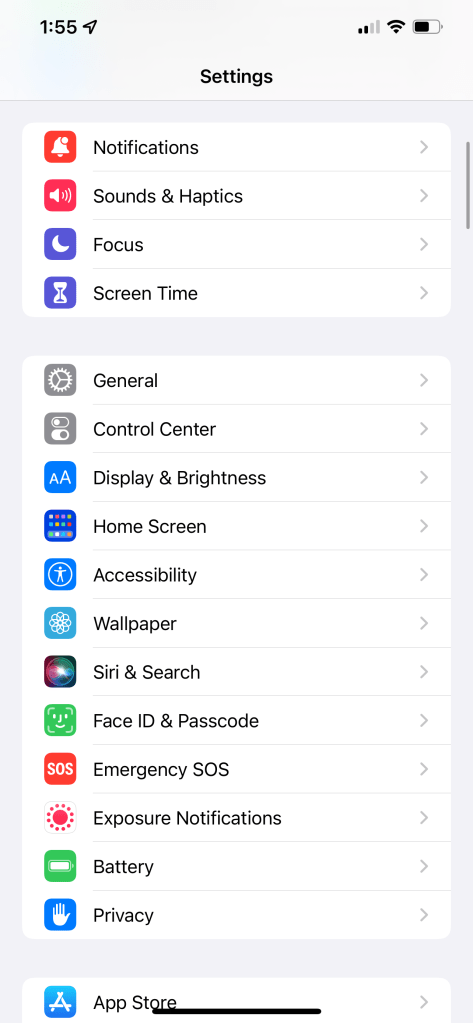
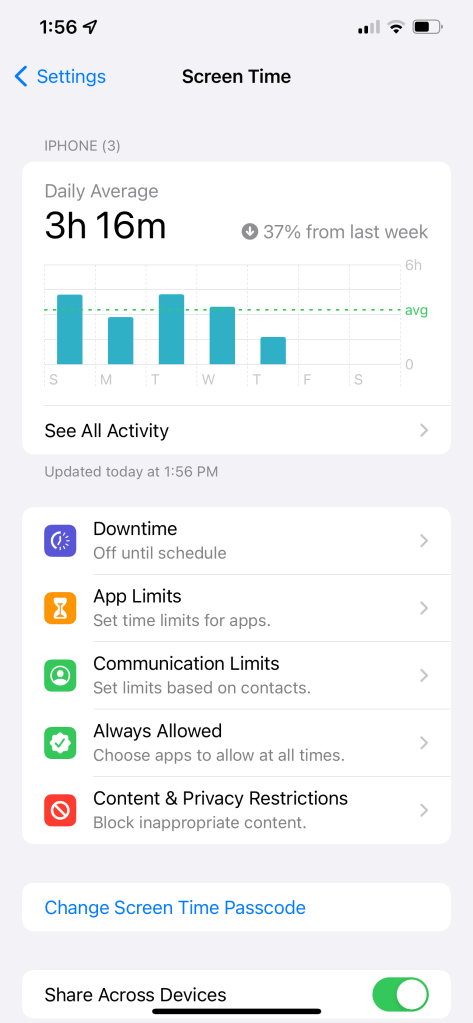
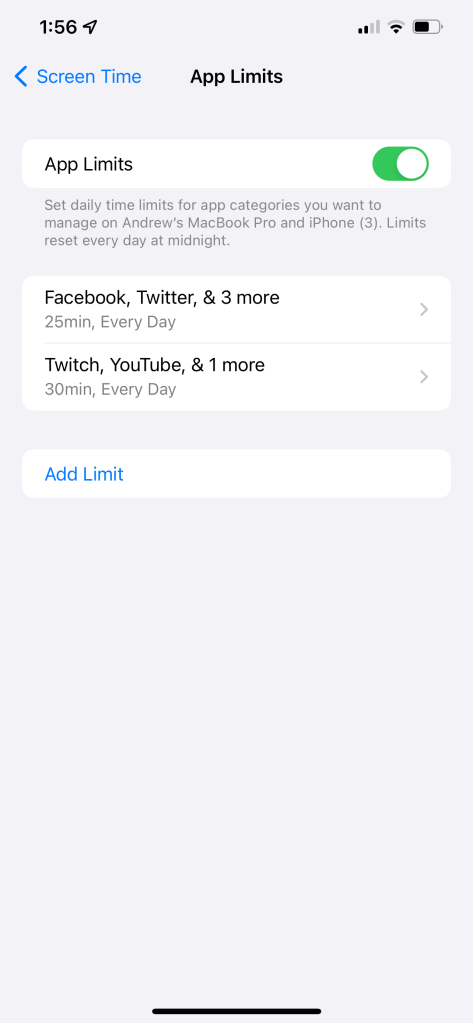
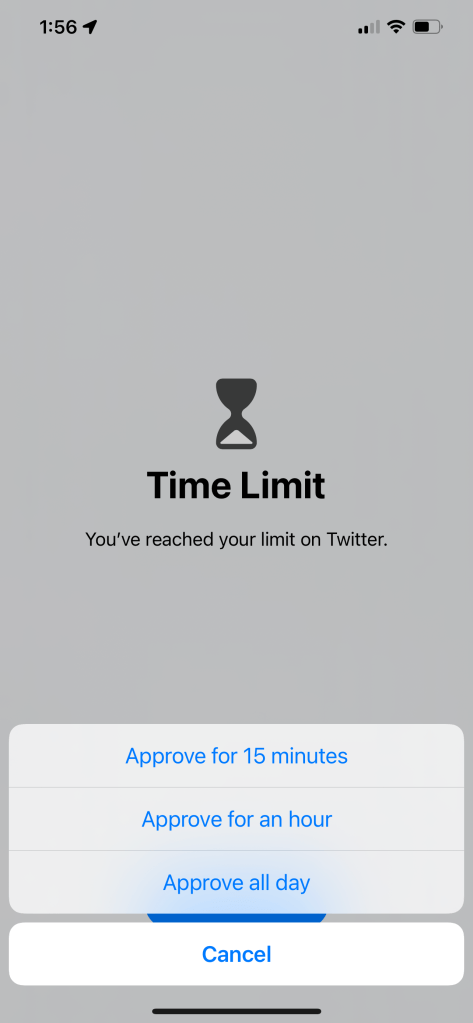
My tech is almost entirely in the Apple ecosystem, which is great for syncing this, since these same limits apply to Safari on my Mac.
Basically, I can still use these apps, but simply knowing there is a time limit forces me to be more mindful of my usage. And should I really need to check the app after my limit is done, I can add a minute, 15 minutes, an hour, or the rest of the day, but this is also a conscious choice. If I have a busy day, I’m not gonna un-restrict an app for the whole day.
If you’re not a Safari user and want to do this on Chrome, get the extension StayFocusd. I used it in college to restrict time wasting sites, and it is SO useful.
I’ve also re-designed my iPhone’s pages to make these apps harder to find. And made apps I should use like Duolingo, Notion, or Headspace much more prominent.
The point is to identify the things that waste your time, energy, and mental health, then both make them harder to access and restrict the amount of access permitted. This has all but eliminated the “I don’t have time” excuse when it comes to YouTube right now, and I’m doing part time work, applying to full time jobs, and working on educating myself every day right now.
Starting Small with GOOD Habits
The good habits I want to nail are reading, meditation, exercise, and a healthier diet.

In just about any book about habit forming, whether that’s Atomic Habits by James Clear or Essentialism by Greg Mckeown, the advice is to start small—smaller than you think you should, and make it easy.
- I might have the goal of reading 45 minutes a day, but I started with 20 and leave my books and Kindle at my desk for quick access.
- I might have the goal of meditating 20 minutes a day, but I’m starting with 5 and putting headspace on the main page of my phone’s home screen.
- I might have the goal to do 30 minutes of strength training a day 5 days a week, but I’m starting with 10 and putting my weights out in an obvious place.
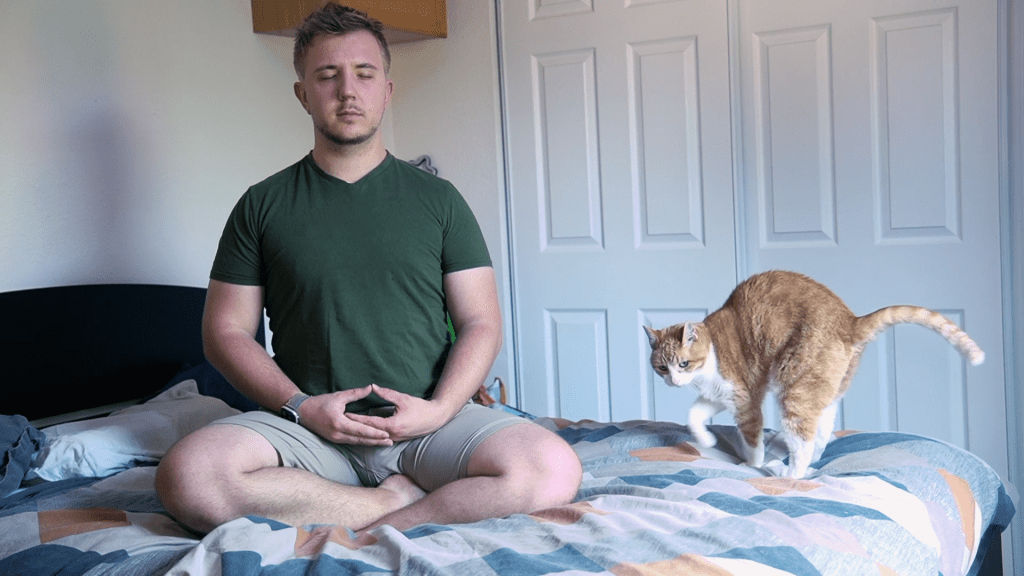
James Clear states the most important part of habit forming is simply showing up to do the habit every day, especially when you don’t want to. And this is best achieved by making those habits small and easy to achieve.
I’m combining a weekly review on Notion (modified from a Thomas Frank template) with daily tracking in Habitica to measure it all, and it’s so satisfying to visualize completing these habits every day.
While this reset is very much in the early stages, it was my infection with COVID and the isolation that resulted that afforded me the headspace to begin and commit. And it’s happening because I want to reinvent myself into the person I want to be.
Reinvention
Who do you want to be?

There are multitudes of friction like our job, our habits, or even our friends and family that might prevent us from being that person, but I ask again: who do you want to be?
I frequently think “I’m not the person I want to be,” but rarely have I ever asked “Who is the person I want to be?”
Like, I don’t want to be a depressed, overweight, wannabe creator who doesn’t like his job and can’t afford to move out from his parents’ place (but I am deeply grateful for their support!)
Taking these things I don’t want to be, I thought, what do I want to be?
- I want to be a passionate, energetic, athletic person who has no hesitation to create and deeply understands the audience I create for.
- I want to have a job that I love and can bring passion for every day.
- I want to comfortably afford to be able to move out.
Once again, don’t just consider who you don’t want to be, build an image of who you want to be. You can run away from something in every direction, but if you’re not running toward something, you’ll just get lost again.
I don’t just want to stop being out of shape. I want to be a person who exercises regularly and eats healthily.
I don’t just want to reduce my anxiety with making content. I want to be an excited, passionate person who is a leader to their community and simply creates without hesitation—who achieves their goals, not just coping with a relative lack of achievement.
The reinvention sets the goal, the reset gives you a clean slate to redesign your life to be congruent with that goal, and resilience helps you carry through.
To summarize, but in reverse.
I’m at a point in my life where I need to reinvent who I am. Circumstances have given me the reset to start building the habits and systems to move in that direction, and I hope to maintain the resilience to see it through… even with the privilege.
Your questions to consider:
- Who do you want to be?
- What do you need to change about your life to do that?
- If you’re struggling to make those changes, how can you make it easier, and how can you show more resilience?
 Andy Cormier