
You see some creators with meteoric growth, seemingly taking over every platform they touch. You see companies doing the same, making brand-defining content on just about every social platform. How do they generate so much unique, engaging content?
The trick is: they don’t, not exactly. They stretch what they do make with content optimization… and probably hire editors… but back to content optimization, which anyone can do.
What is Content Optimization?
Content optimization is the act of turning one idea into many pieces of content, with the idea that it doesn’t take as much marginal effort to make additional pieces of content from the one. A blog post becomes a YouTube video becomes multiple TikToks, Reels, and Shorts.

More or less, it’s how you get the most bang for your buck from the content you make. The most effort generally lies in developing the idea of the content, so it’s less effort to transform that idea for different platforms.
So, what’s the process?
Consider Your Root Content
Your root content is basically what you create. It’s the core of your content and its ideas, and for most creators, it’s the first or second step in their content funnel. For example, my root content is my YouTube, but I make a blog post beforeI make a video as part of that process. However, the blog post is just a moderate expansion of writing the script for my YouTube videos, and as such, YouTube is my root content from which I make other content.

It’s also worth noting that depending on your content, you might have different roots for different pieces of content. If you both stream games and produce a podcast, each of these might be roots for their own content optimization workflows.
If you’re unsure, one way to think about this is to ask what your average viewer would label you as. Are you a Twitch streamer? A YouTuber? A writer? An Instagram model? A TikTok creator? In most cases, this is your root content, even if the majority of your views come from content derived from it. Most streamers grow their audience on YouTube and TikTok despite mainly creating on Twitch. Your root content is where you spend the most effort and creative energy, as it’s the creative part of the content optimization pipeline, and it’s typically where you would identify yourself as a creator. However, you still want to consider how you’ll multiply this root idea along your content funnel in how you plan and execute it.
Design a Content Funnel
Your content funnel is where you take the root content and branch it out. Streams become YouTube videos become TikToks. It generally takes a lot more effort to make your root content than it does to make the rest of the items on your content funnel (though this isn’t always the case). It’s a vertical, downard flow from long-form to short-form.

Many successful gaming creators have a funnel that looks like this:
- Stream (Root) on Twitch
- Long-form videos (YouTube)
- Short-form videos (TikTok)
- Alternative short-form (Clips on Twitter, IG stories, etc)
In this process, the gaming creator might plan their stream with the rest of the funnel in mind. They’d add enough narrative or other planning such that the stream could easily lend itself to becoming an edited-down YouTube video, then they’d reference some of the best (standalone) moments and popular viewer-made clips to make short-form content for TikTok. Some creators may go a step further and post the occasional clip to Twitter or their Instagram story to help funnel.

It’s worth noting that, ironically, the content lower down on the funnel is most likely to repsonsible for your growth: TikToks and Shorts allow for far more discoverability than YouTube videos, and your TikToks can help grow your audience across all platforms. Well-structured and fast-paced YouTube content is a much better way to get to know a creator’s style than more relaxed Twitch streams, and YouTube videos will often be what sparks a viewer to check out a creator’s stream in the first place.
Therefore, in creating your root content, you should consider the structure of your content funnel and prep accordingly. Roots are the foundation of the tree, but they also need the branches to be healthy. The fact you’re planning to make videos and TikToks should alter how you plan your streams (or any root content) to help them more easily become other content. Similarly, making a TikTok version of a long-form video you made might mean that you re-shoot it from relative scratch—but the ideas have already been made and structured, so it’s still not starting from total scratch.
Plan streams and other root content with some of the following considerations to aid in this process:
- What types of streams lend themselves to video content beyond simple highlight reels and best moments?
- How can you add narrative to the stream, both in planning and in editing?
- For example, many streamers will add highly-edited intros to video content made from their root streams. These typically deliver the premise or overarching narrative of the content—why you should take the time to watch it.
- How can you leave notes while editing your videos to lubricate your short-form content?
- For example, leave markers in your Premiere Pro timeline as you make your YouTube video segments that might make good TikToks as well with a few extra tweaks
- For ideal quality, will I have to re-shoot anything for specific platforms? If so, can I do any of that shooting simultaneously?
- For example, you may want to shoot your TikToks in portrait orientation rather than cutting them out from your landscape orientation YouTube videos. You could use your phone or another camera to simul-record the TikTok while you record the video, or add shooting your TikTok separately into the recording plan for your longer video.
But Wait: Your Funnel can be Horizontal, Too
It’s worth noting that your funnel might have some horizontal elements as well, and this entails posting the same content to multiple platforms, usually with little to no additional editing.
- You might multi-stream to Twitch, YouTube, and Facebook simultaneously via restream.io
- Note that this is against Twitch’s affiliate and partnership agreements, which is why many people choose not to sign a contract with Twitch. However, for affiliates, Twitch almost never enforces this no-simultaneous-streaming rule.
- You might reupload your YouTube videos to Facebook
- You might repost your TikToks to YouTube Shorts and Instagram Reels
- You might copy your blogs from your website to a platform like Medium or share a shorter version alongside an Instagram post

The point is, content optimization is all about making the most of your content. Depending on how you treat your social media pages, this could just mean vertical flow from long to shortform, it could mean reposting horizontally, or it could be a mix of both. YouTubers like Mr. Beast, Graham Stephan, and Daniel Thrasher have all been wildly successful reposting YouTube content to Facebook with a few modifications like punchy subtitles and snappier editing, so it’s absolutely a strategy worth at least considering.
Podcasters share to as many podcast platforms as possible, so why should you feel guilty doing the same for your streams and videos?
Workshop: Let’s Optimize some Content
This part is almost exclusively in the video, as it’s a demo on how I optimize my content, but I’ll summarize my workflow and funnel below regarding my post (and video) on When NOT to Pursue Brand Deals:
- Blog Post
- Not my root—it’s a bonus in my video making process, but it’s my “root” for professional things like LinkedIn
- I generally divide the blog post into clear sections (which, if the labels were removed, would generally flow into each other anyways). This helps with chapters on YouTube as well as singular topics for Shorts and TikToks
- YouTube video (root content)
- I always link to the blog post in the YouTube video, and I also embed the video into the relevant post.
- TikToks + YouTube Shorts
- Made by cutting down segments of YouTube videos, then adding some TikTok-stylized things, like snappier editing and more text on screen
- Thanks to the blog post being well-divided into seven sections, it’s really easy to structure the YouTube video into chapters, then to edit those chapters down into TikToks and Shorts under a minute each.
- Occasionally share bits to Twitter (videos + blogs) or LinkedIn (just blogs)
- Record a review of process to make TikToks from a video, using the Blog post as the organizer, followed by making the YouTube video (and how I mark it), then making the TikToks.
Sustainability & Balance are Key
While content optimization takes a lot less effort per piece of content, it still takes effort. Remember, you’re a person, not a content machine. Don’t exhaust yourself from stretching every last piece of content as far as it can go. It’s okay if you’re not completely optimal with your content, this isn’t Old School RuneScape—you can waste some experience points for the sake of rest.

Find balance. Don’t spend so much time optimizing content that you overwork yourself or neglect making original ideas in the first place, but at the same time, it’s important to make the most of the best ideas you have! Whether that balance is not optimizing some content, only doing one or two steps of optimization, or something else entirely, sustainability and balance are key.
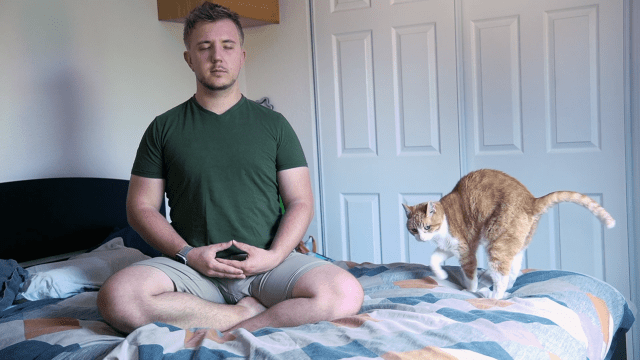
I haven’t been as on it with making TikToks lately, since I frankly find that step of the optimization funnel a bit tedious. That’s because when I do make TikToks, I make like, ten at a time. My sustainable solution might be either to make fewer TikToks overall, to make fewer of them more frequently, or even to hire an editor to take some of the load—I don’t want to simply cut TikTok and Shorts out, since they’re amazing for my channel’s growth, but I must do so sustainably. So again, sustainability is key!
For every like this post gets, I will not make a TikTok. Help me be sustainable.
This is a joke. But please engage with my content!
Go Forth and Optimize!
Consider every step of your content funnel, from long-form roots to short-form branches, and let that help guide your creative process. Whether you only optimize vertically and go from long-form to short-form or add horizontal optimization as well with reposting to other platforms, make the most of your content!
Remember to plan your roots to transition more easily into other content, and remember to be sustainable so you don’t spend so much time optimizing you neglect original ideas or yourself.
And if you’re more curious on why I optimize my content, check out my post on why I write a blog in the first place—beyond optimization, it’s also for the job hunt.
Thanks for reading, and happy creating!
 Andy Cormier