
In most of the world, aside from Japan, South Korea, and Taiwan, people don’t know what an ocarina is.
If I pick a random street in America and play the ocarina, I’d wager that more than 90% of passers by would not know what the instrument is, whereas when I’ve done the same in Japan, the opposite is true.
Ocarinas are an obsucre, niche instrument in most of the world. Let’s try to understand why!
Can We Verify that the Ocarina is Actually Obscure?
Yes. Let’s dive in to Google Trends.
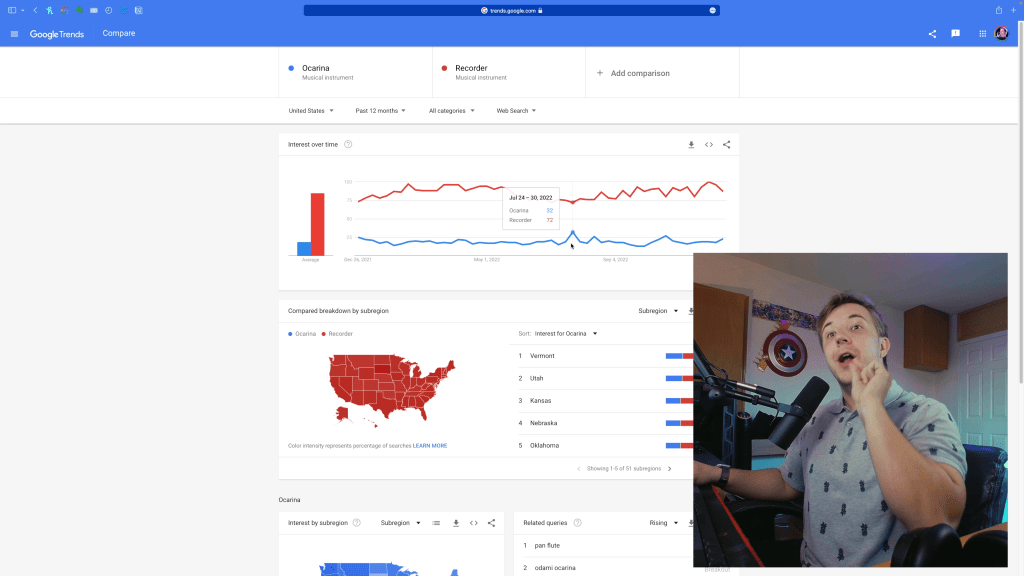
If we compare Ocarinas to Recorders, the most similar instrument in terms of sound and niche, you’ll see recorders absolutely dominate them with 4 to 5 times more searches. The spikes near the middle before September would result from Freckled Zelda’s appearance on America’s Got Talent.
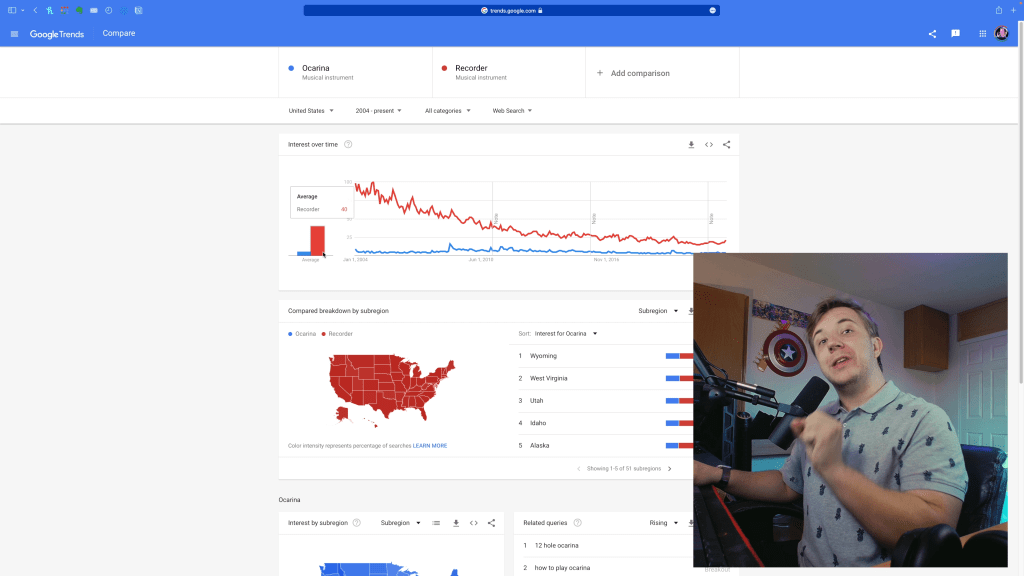
If we zoom out from 2004, you’ll see the recorder has gotten less popular, but the ocarina hasn’t gotten more popular either.
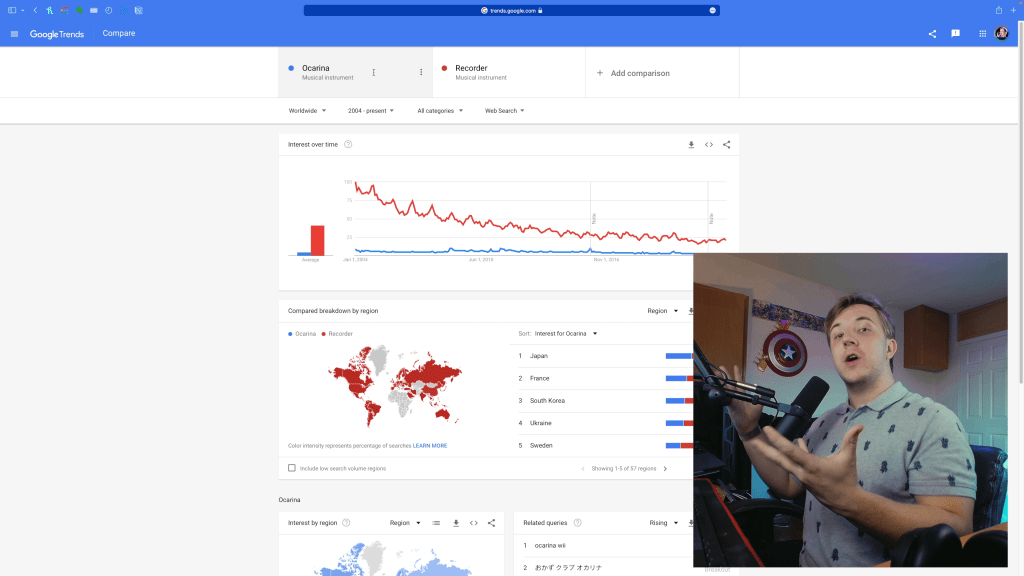
And if we zoom out to account for the entire world, it looks about the same.
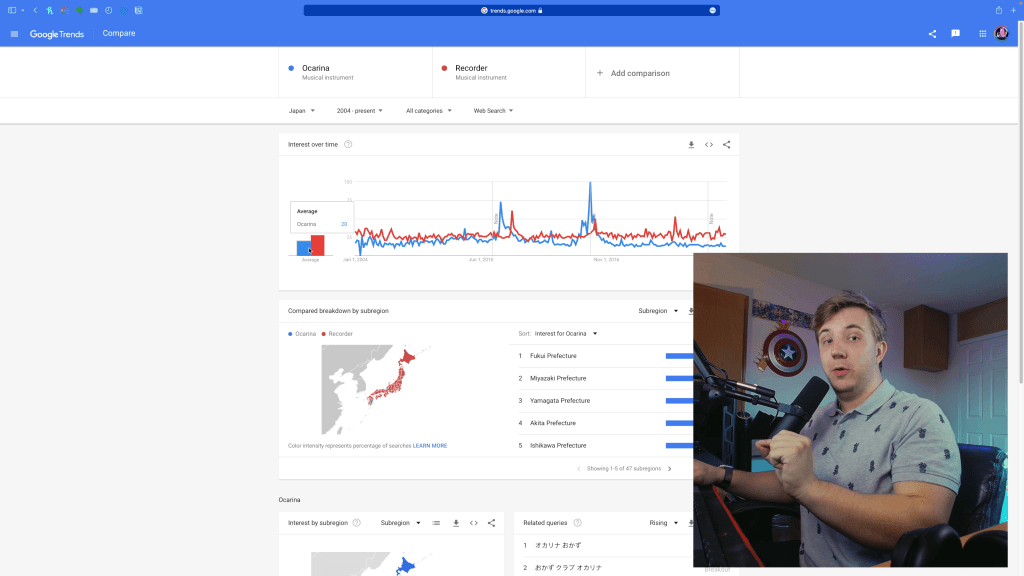
But when we switch to Japan, you’ll see ocarinas overtake recorders sometimes, and recorders only average a bit over ocarinas in search volume!
And if we throw pianos into the worldwide mix, the situation is even more bleak for ocarinas and their (lack of) notoriety.
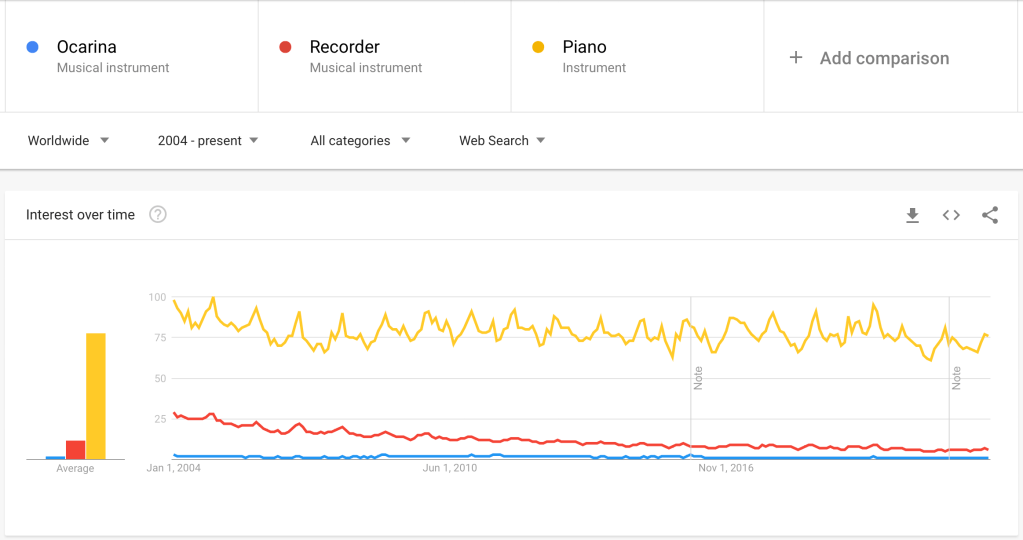
But this is all to say that there is hard data to prove ocarinas are a niche instrument! The picture is even bleaker when we throw pianos into the comparison.
You thought we were done looking at data? There’s more, and we can tell the story of the ocarina using this! Google trends only goes back as far as 2004, but we want to go back to 1853 when Giuseppe Donati invented the modern transverse ocarina. Using Google Ngram viewer, we can see usage of the word “ocarina” in literature dating back that far!
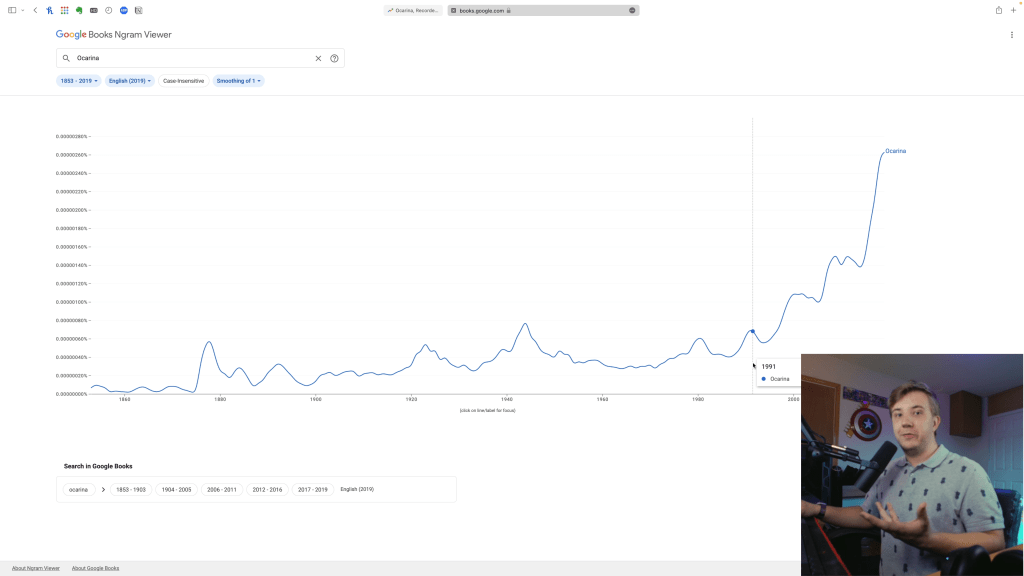
We don’t have as much specificity, since we only get data on the word “Ocarina,” so starting in the 90s, the data spikes upward because of ocarinas in media like Zelda: Ocarina of Time. But how did we get there?
The first spike was in the 1870s, and while I’m not entirely sure why that is, I can explain every spike afterward! In 1928, Takashi Aketagawa invented the 12-hole ocarina, building off the 10-hole Italian design. This shows an international expansion of the instrument, but it doesn’t stop there!
During World War II, US servicemen were provided an ocarina in their packs to play music and help build morale, so through the 1940s, ocarinas experienced their peak popularity as an instrument in the United States. In 1946, a popular group called The Foursome also released an ocarina album, and they even collaborated with Bing Crosby!

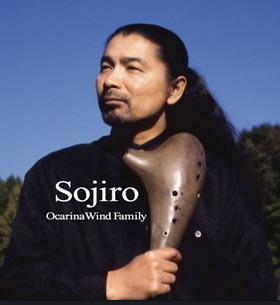
Unfortunately, that popularity diminished in America shortly after, but around 1980, ocarinas exploded in Asia thanksa to Nomura Sojiro, if you see that bump there. From then, ocarinas became well-known in Japan and were featured in popular media, mainly Ocarina of Time, from which you see the usage of the term “ocarina” fly upwards, making the Ngram useless for measuring the instrument alone after 1990-ish given all the interception from gaming and other media.
We also can’t use the Ngram for “recorder” as there are so many things “recorder” can mean outside the instrument, from recording writing to recording sound to transcripts and even the BIBLE. The disambiguation for “recorder” on Wikipedia is a very long list.
But with all this data and history in mind, why are ocarinas so niche?
WHY The Ocarina is Niche
The main reason ocarinas remain niche is thanks to out arch enemy: the recorder.

First, just like making content in the same niche as someone else will likely leave you in that person’s shadow, the same goes for instruments. Recorders have been around since the middle ages in Europe, and while ocarinas have been around for over 10,000 years in Asia and South America, modern music has a heavy European bias, so recorders win in terms of history and their establishment in the musical world.
By function as an instrument, ocarinas and recorders are nearly identical, but recorders have many advantages. They play differently—recorders have multiple octaves for the same fingering (like other flutes) whereas ocarinas have one note per fingering—but have very similar sweet sounds. In addition, outside of multi-chamber ocarinas, recorders have a much wider range thanks to having nearly three playable octaves. To top it all off, recorders also come in various ranges and can be played in ensembles… just like ocarinas. I prefer the sound of the ocarina, and ocarinas are 100% easier to learn the basics of, but once again, recorders have more versatile function as instruments. By musical function, recorders also win here.
Last, let’s compare the marketing of each instrument. Ocarinas have the elephant in the room of all their appearances in modern media, from Zelda to Totoro to Animal Crossing, but recorders have an even larger, more capitalistic elephant: recorders are taught in schools. Almost everyone I know had recorder classes in their elementary school days as an intro to music. Though this has tarnished the image of the recorder as a “kiddie instrument” to many, I would wager over 80% of Americans know what a recorder is while maybe 10% know the ocarina as an instrument.
The ocarina does do some things better! It’s generally more expressive in its sound than recorders (though I am biased as an ocarinist with minimal recorder experience). Comparably, ocarinas are also far easier to learn, as the octave jumps of recorders make it difficult for beginners to develop proper breath control. Multi-chamber ocarinas also achieve the same range as a recorder without the octave jump issue! Ocarinas are also generally more portable, as they have a more pocketable shape and can more easily fit into most bags. I also simply prefer the sound of ocarinas, but great recorder performances do also sound amazing.
Outside the recorder, there are other factors. For example, the ocarina’s inability to play dynamics (easily) prevents it from being a viable orchestral instrument in most cases (outside of soloist performances). If I play a C on the ocarina in forte, it gets sharp. If I play in piano, it gets flat. Ocarinas only have one in-tune volume unless you do alternate fingerings and have superb breath pressure control, making them functionally useless for orchestras outside of solos—recorders have this same issue, actually, but there are far more resources for how to play alternate fingerings to adjust volume while maintaining pitch. On that note of solos, you know what other instrument occupies the niche of expressive solos in orchestral performances? The human voice. Almost any case where someone might play an ocarina as a solo, you’re far more likely to have a singer. They get lyrics, too!
This all may sound like me calling the ocarina a useless instrument, but look at my channel—half of all I talk about is ocarinas and trying to help people learn them! Ocarinas, like every instrument, have limitations, but many of these can be circumvented. Regardless of limitations, the ocarina is my favorite instrument. It’s extremely worthwhile for most people to learn, and I’ve seen the heights of skill musicians have with it as a serious instrument. But back to why it’s niche.
Finally, because of all these issues of its losses to the recorder and difficulty to use in orchestral performances, ocarinas have a lack of establishment. You can probably get in-person recorder, guitar, or ukulele lessons in your city, but you likely can only get ocarina lessons online from the few who might offer them. Most university music programs might have a baroque ensemble with recorders but nowhere for ocarinas to fit in. Almost every music store will have recorders or any orchestral instrument like trumpets or flutes, but if they have an ocarina, it’s probably the cheapest plastic one.
Note that this is not to discredit the many amazing ocarina communities, makers, educators, and creators doing their part to establish the instrument more! Ocarinas have a dedicated establishment, but if we compare that to any more mainstream instrument, there is comparably very little, as ocarinas simply are not a normalized, mainstream, well-known concept in society.
Because the ocarina is so niche, it lacks establishment in society (outside of Asia and some of Italy). Because the ocarina lacks establishment, it remains niche. It’s a feedback loop that we can try to change.
How to Popularize the Ocarina?
Many folks in the ocarina community have varying thoughts about this and about projecting the image of the ocarina as a serious, worthwhile instrument to learn. We saw the negative effects of recorders being everywhere and their image as a “kiddie” instrument but you know what? People know what a recorder is, and a lot more recorder players than ocarina players. We also don’t want to forever be tied to gaming, as that also can give the ocarina a “kiddie” image, but we also can’t reject that, since that’s how most people know about the ocarina at all.
With all that in mind, I have some thoughts on how to popularize the ocarina.
- Campaign for more schools to use ocarinas for their music programs.
My friends David Ramos and Ocarina Owl have already been doing this. Some schools do use ocarinas instead of recorders! And given the easier initial learning curve, I think ocarinas will be more successful at making kids interested in music if given the chance. If kids have faster progress in learning music, they generally feel more confident and excited to continue pursuing it, and even if ocarinas primarily help kids to grow a general interest in music, they’ll at least know and appreciate the ocarina! Some will probably pursue the ocarina itself further. - Get ocarinas featured in more media.
You all saw the little spike in google searches after Freckled Zelda’s AGT performance. Featuring the ocarina works, whether that’s getting the ocarina more mainstream attention, writing more music for orchestras that feature ocarina soloists, finding ways to feature it in soundtracks, or doing what I and other creators do on YouTube. The more visible the ocarina is and the more accessible educational resources are, the more mainstream it’ll become. - As popularity grows, grow the infrastructure!
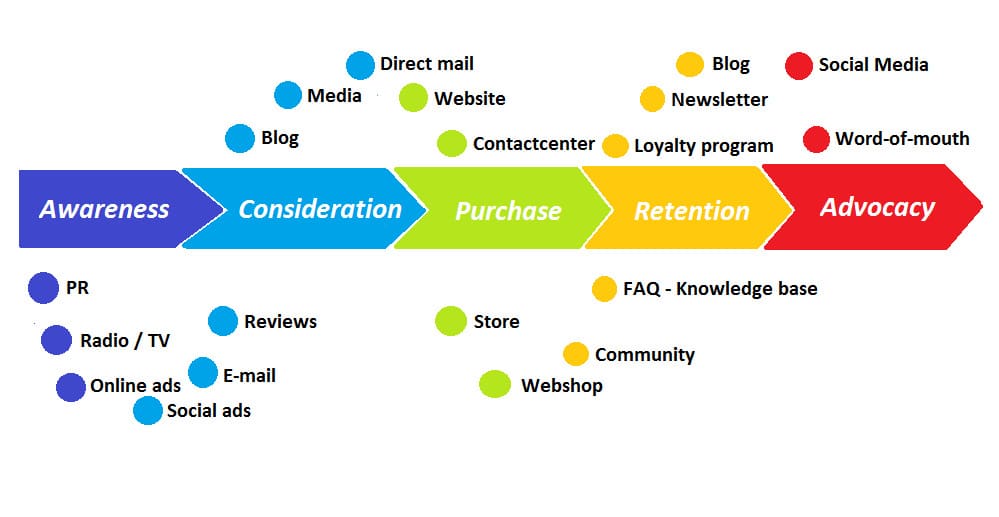
In marketing, there’s a concept called the “user journey” which goes from awareness to consideration to purchase to retention to advocacy. If we make more people aware of the ocarina to the point of considering buying one, people need to know the right ones to purchase! If people purchase the ocarina, we build retention buy developing resources from beginner to advanced levels. We develop ocarina advocates when those people then start performing, writing music, recommending the instrument, making content, or something else to enthusiastically share it.
For most people, the ocarina user journey stops at the purchase. With all the crappy amazon brands, people likely get cheap ocarinas. With how fragmented resources are, many people never learn to play proficiently even if they have a good instrument. And then most people who get good and love the ocarina keep their music to themselves, which stops this funnel from becoming a positive-feedback-loop cycle. The advocates drive awareness, and we could all do better making more people into advocates!That’s why I make my content—to help people make the right purchase, to help point them towards the resources to improve their skills, and to eventually build more advocacy around ocarinas to transform it from a niche instrument into something more normalized.
What can YOU do?
If I have helped you in your ocarina journey, the biggest thing you can do is to be an advocate for the instrument! Post ocarina videos to TikTok, maybe write some music, share educational ocarina content (like mine 🥸), and if you don’t want to put yourself out there, ALWAYS engage with ocarina content you see! Leave likes, subscribe to the creators, comment, watch to the end, do all that—the algorithms promote content that gets more engagement and result in longer viewing sessions, so engage with and watch lots of ocarina content to help it promote ocarinas!
Watch my playlist of ocarina videos below to get started 🫡
The ocarina may be niche, but we have the tools to help it grow!
 Andy Cormier