
Today we’ll be discussing how you can use a powerful concept in marketing, the 5 Step User Journey, to improve your creative strategy, grow your community, and get your content closer to a career!
The User Journey is a marketing model used to help map a comprehensive strategy beyond just a buyer’s decision to purchase. It serves as a helpful reminder that you’re not just advertising to drive awareness, but what that awareness should lead to and what happens after a purchase and so on. This is one of my favorite models to reference in my career, but I realize it’s particularly useful for creators in developing their content strategy!
The User Journey Model
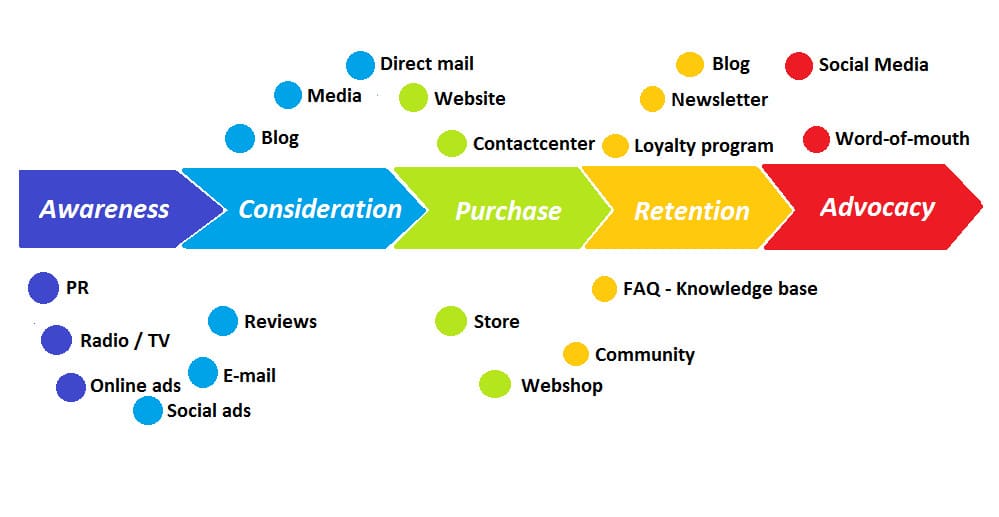
First off, bear with me—even though this describes customer behavior in business, we can apply the model in an almost identical way to you and your content. Just replace “customers” with “audience” and “business” with “content”—audience behavior in content.
We’ll go over each step and to make it relevant to you, use a creator who primarily makes YouTube content as the example for each step!
Also, rememeber models are approximations of reality—they’re not perfect, but they help us understand and predict things. That said, they’re better than nothing—let’s begin.
1. Awareness
First comes awareness—you can’t buy a product you don’t know about.

This is when a customer first finds out about a product or service, or in the case of your content, someone first finds out about you.
The customer doesn’t need to buy the product or even think about buying it, just like a potential viewer doesn’t even need to think about clicking on your video, they simply see it exists.
Application to YouTube:
Awareness: Someone sees your video, whether via search, the algorithm, or via seeing you in a collaboration with someone they already watch
Creators can optimize for this with their titles and thumbnails, as well as building relationships with other creators or using higher-visibility media like Shorts or TikToks to supplement. In short, anything that makes someone more likely to click on your video or otherwise find out about you.
2. Consideration
If the product is relevant, consideration begins.

This is when a customer, as per the name, considers making a purchase. With your content, this stage is the time between discovering you exist and hitting the subscribe or follow button.
Application to YouTube:
Consideration: Someone watches on your video and considers subscribing
Creators can optimize for this by improving their content and creating “clusters” of content the algorithm can use to help recommend more of your videos after someone watches one. This can range from the time between watching one video and subscribing if you’re lucky or when viewers may start actively seeking out more of your content while still undecided on subscribing.

IE. I have many ocarina-related videos. Someone who watches one is more inclined to watch more, so if I have more, the algorithm will likely promote them to this viewer.
3. Purchase / Conversion
As you might think, the purchase step is when a transaction happens.

A customer buys a product in business, but in content, this is conversion from a stranger to a follower or casual fan. We’ll call this conversion for content because this step of hitting the subscribe/follow button is generally not a purchase, but is a transaction of continued attention in order to watch more of your content.
The time it takes to go from awareness to purchase or conversion can vary wildly. It may range from a few seconds (IE. seeing a new candy bar at the grocery store checkout) to a near indefinitely long time (IE. needing a new camera, spending weeks researching options, saving up money for months, then buying it).
The same can go for your content! Someone may stumble upon your TikTok and follow you immediately, while someone else may see you collab with a creator they follow, be vaguely aware of you and your content, watch a few videos of yours, then eventually follow you after finally clicking on a video that wows them.
Application to YouTube:
Conversion: Someone likes/subscribes, converts from stranger to casual fan
Creators can optimize this with calls to action, or making content so good that viewers feel they must subscribe—look at people like Defunctland who make full-fledged documentaries and have ballooned in growth.
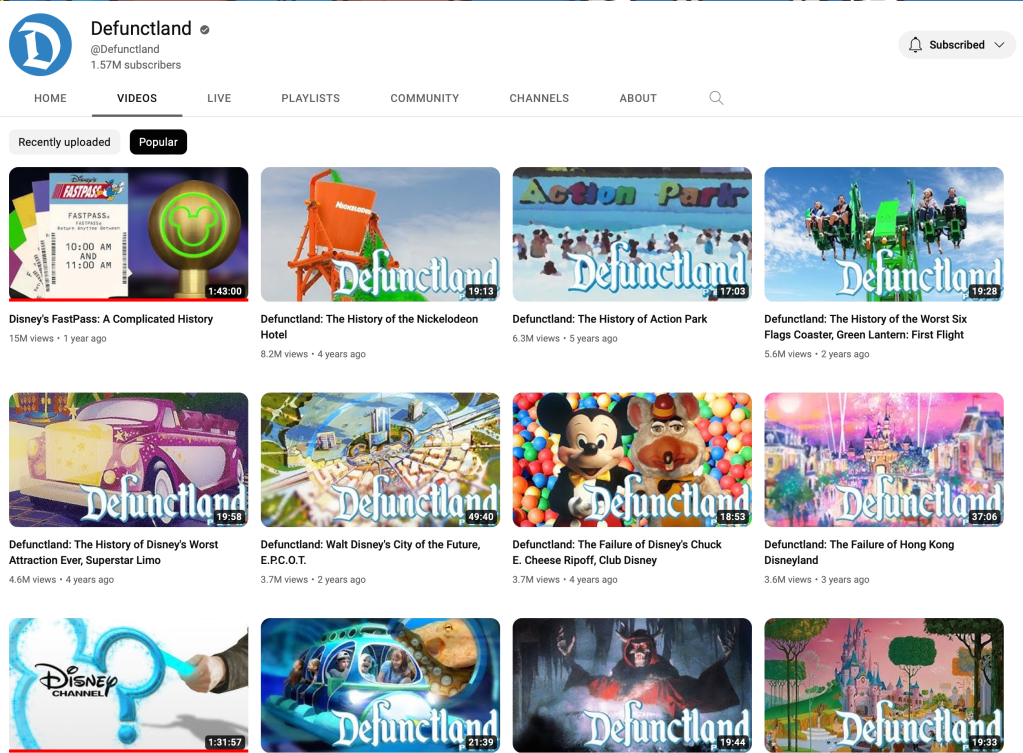
Basically, shorten the length of consideration by making conversion more worthwhile—be so good they can’t ignore you. This is the step most creators stop at—YouTubers improve their content to gain more subscribers, but what do you do to serve the people who are already subscribed (beyond creating more content).
Also note your standard for a “conversion” could range from clicking on a video at all to subscribing to your content to buying merch—but for our model, we’ll consider subscribing/following as that major decision point!
4. Retention
Retention is about keeping a customer coming back for more.

It doesn’t necessarily have to be further purchases (though return business is the best form of retention), but it necessitates continual engagement with the business, like reading the company blog, watching tutorials, and the like.
In content, retention is more about your community building and giving your followers additional ways to engage with you, your content, and each other. Continually making more content is also a retention strategy, albeit the baseline—they can’t come back if there’s nothing to come back to—but we’ll cover more direct community building approaches.
Application to YouTube:
Retention: Discord server, streams, Patreon, email newsletter, Twitter follow, YouTube membership—the casual fan joins your community
This is anything that moves someone beyond casual viewing of your content (most subscribers are casual viewers)—viewers not just invested in your content, but in you as a creator (try not to set unrealistic parasocial expectations).
Optimize this by doing things to foster community with your content. Most YouTube creators never consider this step. It’s fair to focus primarily on your content, but remember that every metric is driven by people watching your content.
You can simply accept you entertain or educate a certain number of people (again, continually making good content is part of your retention strategy), but you’re also missing out on fostering a real community out of that. When I say most creators never consider this step, they do a lot of surface level things, like asking for Twitter follows, but it’s also about giving something back to your community. Engage with your fans on Twitter or a Discord server, provide exclusive extra content on Patreon or an email newsletter, or otherwise do something to allow fans to participate in a community beyond the YouTube comment section.
What you give to your community, you often get back.
5. Advocacy
Advocacy is when a customer goes forth and, well, advocates for a product or service.

This can be good reviews, telling friends or family, posting on social media, or anything of that sort. For your content, it’s similar in the sense of sharing and telling others about your content, but for the sake of this approximate model, we’ll also consider any additional way viewers can support you beyond typical engagement (IE. liking and commenting—they’re definitely already subscribed by this point).
The main takeaway is that advocacy leads back to awareness. If your customers or audience are recommending your product or content, they’re marketing for you—you’ve built a perpetual growth machine. The user journey is a cycle.
Application to YouTube:
Advocacy: Your audience sharing your content, actively participating in community things like streams or your Discord server, or giving you some level of additional support beyond the norm, like buying merch, attending a meet and greet, buying through your sponsors, or some other financial support.
At this stage, your audience not only enjoys your content, not only participates in your community, but also avidly supports you. Only a small percent of your subscribers reach this point (just like only a small % of you are subscribed now), but I’d wager anyone can make a career off 1,000 advocates, just as Kevin Kelley describes in his essay 1,000 True Fans.
A thousand customers is a whole lot more feasible to aim for than a million fans. Millions of paying fans is not a realistic goal to shoot for, especially when you are starting out. But a thousand fans is doable. You might even be able to remember a thousand names. If you added one new true fan per day, it’d only take a few years to gain a thousand.
Kevin Kelly, 1,000 True Fans
If you have 1,000 supporters who pay $5 per month on Patreon, who buy your merch when it drops, or even who simply share your content when it comes out, you’ve made it—at least when you consider you still have ad revenue and sponsorships in addition to these. Then, advocacy builds awareness to repeat the cycle! Obviously it’s not a “get rich” level of income, but it can be enough to have a real, tangible career off of content.
⚠️ AUDIENCES!
If you reach the advocacy stage, be careful of creators who promote scams. As we’ve seen with Coffeezilla’s exposé on Logan Paul’s numerous crypto schemes, people bought into those things because they believed in him.
Any time you want to financially support a creator, make sure it’s something reasonable and that expectations are clear (IE. you know you won’t get a donation back, etc). If you feel suspicious about it, don’t do it. Knowing you’ll lose $60 buying merch is one thing, but if you think you’ll become a millionaire with their crypto scheme, don’t do it.
While I recommend that creators treat their content more like a business, businesses run by creators still deserve the scrutiny you’d apply to a more corporate operation! Just because a business is run by your favorite YouTuber doesn’t mean that business is infallible.
What About for Twitch Streaming or TikTok?
Most creators miss a step or two, and the exact steps they miss depend on the platform they create on. YouTuber content generally serves Awareness through Conversion well, but, ironically, streamers are much better with the retention and advocacy steps than YouTubers, but they miss the awareness. In general, people only watch streams after discovering someone from their content elsewhere. I don’t think I’ve ever browsed Twitch. I’ve found people on YouTube, then started watching their stream, but never found someone on Twitch.

Thus, in most cases, streaming alone neglects the awareness step of the user journey. As someone who’s done numerous brand deals and partnerships with streamers in my career, their greatest strength is their ability to foster a community, the retention and advocacy steps, but many of them have relatively stagnant growth, since they don’t do much to drive awareness other than when their advocates share them.
If you have 10,000 followers and 50 of them are hardcore advocates, you might reach 50 new people a month without collabs if you only stream… and you’ll probably lose followers each month as well. Ironically the best way to grow as a streamer is not to stream—make videos on TikTok and YouTube that funnel to your stream. The point is, streaming alone lacks the growth in awareness.
With TikTok, you get the best Awareness opportunity by far, but given how bite-sized content on TikTok is, it’s extremely difficult to get beyond someone just hitting “Follow.” TikTok has so many great tools to engage with other creators to help drive more awareness and grow your audience, but it’s not great for deeper community building.
How to Fully Develop Your User Journey
Many creators, whether on YouTube, Twitch, or TikTok, have incomplete user journey maps. Sometimes, the best user journey will span multiple platforms!
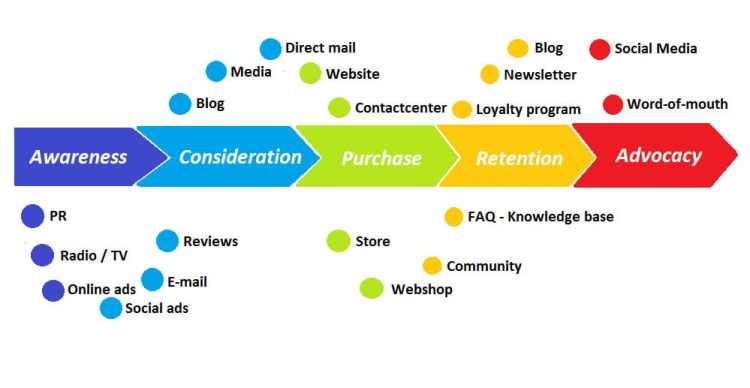
Here are notes on a comprehensive user journey strategy for a creator! You should hit every step on this in some way, or you won’t get the positive feedback loop of growth.
Awareness
- Post to TikTok, Shorts, and Reels for broader awareness
- Focus on improving your titles and thumbnails—clickbait is fine if it’s true!
- Build relationships with other creators to be seen in other content, driving much higher quality awareness
Consideration
- If someone sees yout thumbnail and title multiple times, will they be more or less likely to click on it?
- I often see a thumbnail for a video I’m interested in, note it, then try to find it later if it really sparks my interest when I have time—this is consideration at work!
- Focus on improving your content so that people enjoy it
- If your content sucks, they won’t move on to the next stage
Conversion
- Make sure your content is good enough to warrant liking, subscribing, or following
- Consider calls to action to remind people to do so—people who stumble upon good content forget even if they love what you’ve made
- Don’t let this be the final step
Retention
- BASELINE: Continue creating content for your community to come back to. Otherwise the following won’t really matter.
- Give your viewers ways to engage with you other than the comment section and ways to support you other than liking and subscribing
- Make an email newsletter, a Discord server, a Patreon, etc. and encourage people to check it out!
- Let your audience know they can reach you on Twitter or a stream, if relevant
- Whatever you ask your audience to engage with should be worthwhile. A dead Discord is pointless. Why follow you on Twitter if you only post to promote your stuff? Be true to the advertised perks on Patreon. If you don’t have the time to devote to these things, nothing is better than something disappointing.
- You can maintain boundaries while still engaging with your community — IE. you only respond to stream chat, you don’t check Twitter DMs, you only let your audience know how to reach you if they join your newsletter or Patreon, etc.
- You don’t need to give your audience full access to your life, and you’re never obligated to give more than you want—but giving back a bit is what drives retention and fuels advocacy.
Advocacy
- If you’ve built a solid community through retention strategies, you should have some advocates!
- Give them opportunities to further support you, like encouraging them to share videos, releasing (high quality) merch, or adding higher tiers and perks on Patreon, YouTube memberships, or other similar services. 1,000 advocates is enough to build a career!
- Remember, your audience generally wants to support you if they reach this point. You’re only exploiting them if you scam them or charge unreasonable prices or set unrealistic parasocial expectations (like “I love all my viewers, they’re my friends” is simply not true—you may love your viewers as a whole entity, but don’t mislead them into thinking you have a balanced relationship).
- Even more importantly, if you want your audience to advocate for you, make sure you maintain quality on what led them to support you in the first place—your content.
- You can have someone who really supports you as a creator, but if you get complacent and lose quality content, someone sharing your content is pointless.
LAST: Remember how each step feeds into the next. How will your awareness drive people to consider converting into fans, then develop community retention, then advocate for you and your content to drive further awareness?
Models are only approximations of human behavior—these five steps are fluid and gooey and blend with each other in many ways. If you’re stuck or something feels like it applies to multiple steps, don’t sweat it! Many, many creators succeed without hitting all of these steps, and the point of using a model is more about improving your approach to strategy anyways.
You really just need to focus on making better content and building a better community, but considering these 5 steps is supremely helpful for developing a strategy to do so with intentionality!
In Conclusion…
Marketers have learned a lot from creators over the last decade, but I think that’s been a very one-sided exchange of information. I want to close that gap and help creators use marketing strategies to improve their content and make their goals more realistic! Building a strategy around the 5 step user journey is one fantastic way to do so.
On that note, I highly recommend you check out my post on task & time management for creators next to level up your level of organization and apply intentionality not just to your strategy, but also to each day!
 Andy Cormier