
I quit social media for a month… as someone who does social media management.
- Why did I do it?
- How did it go?
- What are my plans for using social media in the future?
Digital Minimalism
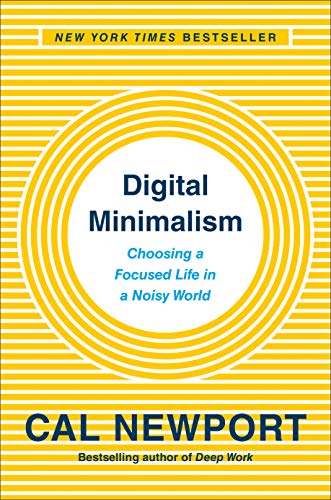
We’ll start with WHY I got off social media. I started reading the book Digital Minimalism by Cal Newport, here’s a quick summary of what it recommends:
- 30 days, cut out most unnecessary social media to spend time on more meaningful activities and engage in deeper socialization (calls, meeting IRL, etc)
- Develop specific plan for re-implementing usage of social media after those 30 days are up so you don’t go back to the way your life was before, IE. only check Twitter on Wednesday and Saturday in the evening
- Take regular breaks from technology after—IE. occasional no-phone weekends, etc.
I don’t agree with everything he says in the book—it’s not realistic for most people today considering how digital the world and business are. However, I do agree that spending less time on social media and being more intentional with how we use it and other digital tools is a good thing, so I did the detox!
Why: Time and energy to do the things I want to do
What I did
- No Twitter, IG, TikTok or Reddit unless I needed to research for a job interview or other work
- Use Buffer to post to Twitter throughout
- Can use TikTok to upload / research people I’m interested in collabbing with
How it went
Given so much of my life is digital, at first I definitely felt like I was missing out, stuff like seeing my friends Tweets, things like that. But I realized most of that didn’t matter—in Digital Minimalism, Cal Newport talks about how low-grade interactions on social media make you feel like you have a relationship with a person, and to a degree, you are, but it’s a very shallow level of connection. Liking somebody’s IG post and commenting on it isn’t the same degree of connection as messaging them, which generally isn’t the same degree as calling them, which is still less deep than seeing them in-person.

And yet, the low-grade connectivity social media provides stops us from doing deeper communication—if we feel like we’re caught up enough with someone’s life because we watched their IG story, why contact them?
This isn’t to say I suddenly started contacting all my friends right away, that’s February’s challenge video on rekindling old friendships, but given how shallow social media interaction is, a month off of it really didn’t feel like I was losing much. I still had Discord, texting, and messenger to contact people without wasting my day on Twitter and Instagram.
With all this time not using social media, my mental health definitely improved—not seeing constant negative news, influencer drama, comparing myself to other people—and I was stil informed by occasionally watching the news and creators like Phillip DeFranco to see what’s going on—watching a 15 minute video is a much more efficient way to stay informed than checking Twitter for 3 hours a day.
That said, I was only a little bit more social/productive than before.
In my first week, I was motivated and excited, so I went ham making videos for YouTube, 6 in one week. However, since I make YouTube content and treat consuming it more like TV than I do social media, I didn’t forbid myself from using it. Thus, I inevitably still spent too much time on YouTube, though less than the previous month & spent too much time going back and forth between apps I didn’t actually check. The mindless app checking went down with time!
What’s Next with my Social Media?
- Use social media less
- Set specific times when I can use it
- Focus on connecting with people beyond just engaging with social posts
I haven’t set these specific rules yet, and the mindless social media checking is starting to come back. Over the next few days, I’ll workshop rules that are specific and restricted but practical in that my career is online and I can’t escape that. I definitely don’t need to check Twitter every day, and I could spend less time watcing YouTube.
However, given I work in social media for my career, the bigger thing is being able to approach these platforms with intentionality. When I get my next social media job, I’ll have to spend a lot of time on social media! Thus, I have some realistic ground rules social media people can apply!
1. Social media checking is NOT productivity
It may be a job function for your social media manager role, and it can feel productive to constantly check social for posts and messages to respond to, but if you wait an hour those posts and messages will still be there.
2. Notifications will still be there whether you check them now or later
I reiterate this point! Notifications want your attention now, but they’ll still be there later. You’ll be more productive if you can clear 20 notifications in 15 minutes once an hour than spending an hour continuously on social media and clearing 1 notification per 3 minutes. Batch your notification checking!
3. Set time for checking social media
Instead of checking social media several times an hour, maybe use a pomodoro timer for focused work, then check it for a few minutes on focus breaks. Maybe set specific times in the day to check notifications and messages. Nobody expects instant responses from most brands, so you shouldn’t overly pressure yourself to do so!

I’m a fan of setting aside either 5-15 minutes per hour (IE. 50 minutes of work, 10 minitec checking & responding) or 15-30 minutes per two hours (IE. 90 minutes of work, 30 minutes checking & responding)
4. Disable all notifications for social apps on your phone (and most other apps too)
You’re going to check these once every hour or two in the apps You don’t need to be reminded to do so while you’re trying to focus. In my 2 years managing AVerMedia’s social media, we never had an emergency that couldn’t have waited a bit. Granted, I didn’t wait, but my obsessive checking of notifications was unproductive and unhealthy, andreason for making this video is so that I won’t be like that again!
5. Set boundaries—don’t check work socials outside work hours
I always had my last job’s social media pages in open tabs all day. It was atrocious for work-life balance, because even while doing my own thing outside work hours, my obsessive notification checking mind never wanted to miss anything. That resulted in, on top of checking social notifications way too much during work, doing the same outside work. Sometimes social media managers need to do checks at abnormal hours, but those shouldn’t ba a normal thing to do!

Set boundaries, and have a life outside social media. It’s my job, and it’s something I can enjoy using personally, but it’s dangerous to mix the job function with the personal enjoyment function. Set boundaries!
6. Set an intention whenever using social media
Mindless browsing is the mental health and productivity killer. During my detox, I started working on building a freelance marketing business, and I set the intention to research a particular business’s social media presence, only did that, and didn’t get sucked down the rabbit hole.
Set an intention like, “I will clear messages and notifications” or “I will research this hashtag” or “I will mindlessly browse for 15 minutes and enjoy it, then stop when my timer goes off”
This is the key that holds everything else together! Social media can be productively used with limits and intentions. Setting specific times to check and disabling notifications stops unintentional usage. Boundaries and intentionality are hard, but they can get you all the upsides while eliminating most downsides!
Final Thoughts
How do you use social media? You don’t need to go to the extremes of a Digital Detox to be more intentional with how you use it. And frankly, the people that benefit most from this are social media managers.
Whether you work in social media or not, everyone can benefit with using it more intentionally!
 Andy Cormier