
One thing I mention often are the limitations of ocarinas. However, I don’t think I’ve ever explored all of them. Let’s do so!.
Ocarinas Have Limited Range
Compared to most instruments, single-chamber ocarinas have highly limited range at an octave plus five. While the range is equivalent to the average person’s singing range and does allow for a wide repertoire, it’s insufficient for a whole lot of music.
The solution we have is the multi-chambers ocarina, but it’s literally pasting multiple ocarinas together and introduces new challenges. Multi-chambers have a longer learning curve, and songs in registers with quick runs in the passaggio are difficult. Think runs that have a lot of D-E-F action, since D-E is usually the chamber border.
In singing, the passaggio refers to the break between chest voice and head voice (falsetto) in singing. Think when you’re going back and forth between chest voice and falsetto. This is similar to chamber switching, I’ll keep using that term to refer to the break between chambers in multi-chambers!
That all said, this limitation is part of the instrument. If you love the ocarina, you have to love working within these limitations—something, something, The Obstacle Is the Way.
Playing Dynamics and In-Tune Is Difficult
Dynamics and tuning are another major limitation of the ocarina. With the instrument, volume and tuning are tied together: more airflow on a given fingering makes the ocarina both louder in volume and sharper in pitch. This makes it incredibly difficult to play dynamics while remaining in tune on the ocarina.
In order to actually play dynamics in tune, you need to use alternate fingerings. This sounds intimidating, but it’s as simple as slightly covering an extra hole and blowing more to play more forte, or slightly uncovering a hole and blowing less to play more piano. Each ocarina will vary, and each note will likely vary too, but it’s just about the only way to play dynamics on the ocarina.
Why “just about” the only way?
Ocarina makers have actually attempted to alleviate this issue over the years via tuning plugs! These plugs typically have been placed on the fatter/flatter end of an ocarina and can be pressed in or pulled out to increase or decrease the size of the chamber of an ocarina, thus changing airflow requirements for tuning. However, this helps less with playing dynamics and helps more with adjusting overall breath pressure requirements and volume. If the entire ocarina is flatter, you can blow more to get more volume and compensate for that extra flatness.
These difficulties in tuning are even more difficult when considering inconsistent notation standards!
Multiple Notation Standards are Competing
At OcarinaFest last year, one panelist proposed a new standard for ocarina notation and nomenclature. While I love the idea of a cohesive standard for the instrument, there are already multiple competing standards for the instrument, with two main dominant formats:
- The most-used standard is that used in Asia, with names like “Alto C,” “Soprano G,” or “Bass C”
- Italy also has a standard with names. Alto C is “Do 3” in the Italian system, Soprano G is “Sol 2,” and Bass C is “Do 5.” Think solfeggio Do-Re-Mi-Fa-So-La-Ti-Do, and “Do” is the key of C, while “Sol” is the key of G.
Within these standards, some companies have taken liberties that cause further confusion, like STL Ocarina calling “Tenor C” for what is commonly called “Alto C” in the Asian standard. Tenor C doesn’t exist, though there is some room for debate as to whether a “Tenor” sub-range of ocarina should exist somewhere between Alto and Bass.
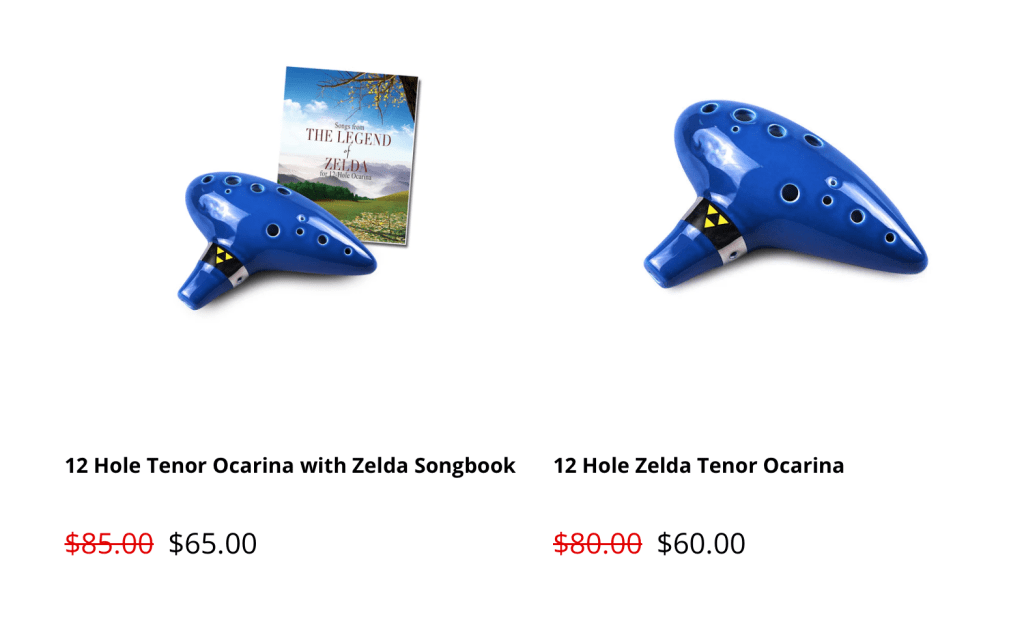
We don’t like this “Tenor” nomenclature!
My opinion would be to follow the standard we already dominantly use, which is the Asian one, but competing standards will probably remain as long as resources and information about the ocarina remain highly fragmented.
Resources & Information are Highly Fragmented
Currently, the most up-to-date resources and information regarding ocarinas reside in Facebook pages such as the Global Ocarina Community and The Ocarina Network. However, social media pages are frankly an awful way to maintain records and resources for a topic as vast as an entire musical instrument.
We used to have the Ocarina Network forum, which is mostly dead now, but that, too, also suffered from fragmented information within the site. Many key pieces of information, arrangements of music, and other resources are functionally lost in pages and pages of archived threads. If you delve in decade old threads, you might find some fun resources! …and arguments.
As I’ve been keeping up with David Ramos as he’s been working on his ocarina museum project, this fragmentation in information has actually been one of the biggest challenges in sufficiently providing information for each ocarina he has. Thankfully, his efforts will consolidate information about the instruments themselves and their makers!
However, when it comes to information, educational, and developmental resources, they are both fragmented and generally insufficient.
Ocarina Resources Are Also Insufficient at All Levels
Depending on who you ask, some key voices in the ocarina community may say that there is a lack of beginner, intermediate, or advanced resources, information, and sheet music.
Which is true? All of them.
If we think of the progression of the ocarina community as a funnel with a filter, a certain number of people who buy an ocarina will attempt learning to play it at all. Then, a certain number of those people will reach basic proficiency, and among those basically proficient folks, another portion will become intermediate, and so on, until we get more advanced players. I have no idea the exact numbers, but let’s say for every 100 new ocarina buyers, 30 become basically proficient; of those 30, 15 become intermediate, and of those 15, 3 become advanced. A 3% rate of buyer to advanced player (in this hypothetical).
At every step, insufficient resources means a lower likelihood of someone moving on to the next step. If new players lack cohesive introductory resources like a method book, teacher, or community, they’re less likely to reach basic proficiency. If proficient players lack sufficient resources—like more challenging, curated sheet music oriented to develop skills—they’ll be less likely to reach an intermediate level, and so on. We can raise those numbers for each step!
Currently, most resources are self-made, self-adapted, or done so for specific projects, like Ocabanda generating septet arrangements in order to have repertoire for performances.
Nevertheless, it’s still incredibly difficult to find resources for the ocarina that many other instruments have—think standards like the “Twenty-Four Italian Songs & Arias of the 17th & 18th Centuries” for opera singing, common jazz standards for various instruments, or common classical music for pianists. These establish a common foundation for musicians in a given instrument or genre, and the ocarina lacks these.
How Do We Fix These Issues?
Some issues are inherent to the instrument, and we simply must practice working around them to overcome them, such as using multi-chamber ocarinas and practicing alternative fingerings to play dynamics. However, the standardization, information, and resource issues are all very solvable.
I am actually working on a centralized ocarina resource website. It’s not published yet—expect an announcement by the end of the year—but I intend to make a single website that can be a resource to answer most ocarina information-related questions, as well as act as a reference page to discover other ocarina resources—think a one-stop-shop for becoming an informational expert on the ocarina. If David is aiming to catalogue and consolidate information for all instruments and makers, I aim to do the same with consolidating and standardizing information and education.
I also aim to start a nonprofit to fund ocarina growth, resource development, music composition/arrangement, and more. This might make supporting your favorite instrument a tax write-off, too! Wish me luck!
And the best way to support me is simply to continue watching, make sure you’re subscribed, and use my affiliate links for Amazon or code ANDY10 on Songbird. I may do a Kickstarter or something in the future, but I am telling you about these ideas now to hold myself accountable! I’ve sat on this idea for around 8 months and really need to do something with it—put my MBA to good use!
 Andy Cormier