I Got My MBA… Now What?

In 2024, I graduated with my MBA, and it’s left me thinking, “Now what?” It’s certainly been helpful on my career, but as I’m approaching the end of my subsequent master’s degree, I’ve been reflecting on what this entire program has meant for me.

What Did I Learn?

As you might expect, the coursework focused heavily on business fundamentals. I sharpened my ability to apply frameworks and mental models that break down how a company functions, teaching me broadly how to think. More concretely, I learned how to analyze operations by looking at the numbers—whether that involves data analysis or crunching financial statements. My grasp of finance, in particular, became deeper with every class, though that might have been a result of having great professors in this area.

We also examined how to launch a company from the ground up in my entrepreneurship class. From filing legal documents, to establishing sources of revenue, to structuring a leadership team, the process became a tangible roadmap. I also learned how to use AI tools effectively, but that more led to debates with professors who seemed to believe AI could solve every problem in existence. I’m not anti AI, but I lie somewhere in the middle between a luddite and a cautious optimist.

Another surprise was a class on law, which coincided with starting to date my girlfriend who is in law school. Suddenly, I was avidly interested in legal topics out of a sense of wanting to talk shop with her. Nevertheless, an MBA teaches you little about a lot, providing an overview into many business topics and establishing a foundation for many career paths.

Are Job Prospects Any Better?

Photo by fauxels on Pexels.com

An MBA doesn’t hand you a golden ticket to employment, but it does open doors to conversations you might not have otherwise. The network I built through my cohort and professors has been invaluable. One professor even hired me for a freelance project at a nonprofit, which served as a springboard for additional opportunities, and I’ve just recently gotten some promising full-time job prospects.

I would not say recruiters are racing to offer positions, seeing as the Bay Area has a horrendous job market, but the program boosted my confidence in presenting my skills and showed me how to create opportunities when they are not immediately apparent. In a sense, I have become a better salesperson for my own career, better equipped to create and capitalize on opportunities.

Am I a Better Person—or at Least a Better Employee?

Becoming a better person is subjective, but I can confidently say I grew into a stronger, more resilient employee. In early 2022, I was in a rough spot: laid off, stuck in an abysmal job search, newly single, and slowly drifting away from many friends. The MBA gave structure to a life that felt like treading water.

Spending time in class and being a leader on tough projects reminded me that I am intelligent! Some friends like to joke that I’m an “academic weapon” because I consistently approach the top scores in my classes and am solid at both writing and presenting. Beyond grades, I found genuine friendship—bonds that have lasted well beyond group assignments. That renewed sense of belonging and the realization that I have value to share made me feel more purposeful and far more supported than I had felt in a long time.

It’s a Revolving Door, Actually

Photo by RDNE Stock project on Pexels.com

After finishing the MBA, I chose to pursue an MS in Financial Analytics. Most of my previous credentials leaned toward soft skills, and I wanted something more quantitative. Finance crosses every industry, so it seemed wise to add that dimension to my resume. The MSFA is also only 7 extra classes on top of the MBA, so it’s a light additional course load for two semesters—though I’ve had many administrative headaches with the university, like double-charged tuition fees.

How Would I Re-Do College and Grad School?

If I could redo my educational path knowing I’d end up doing an MBA and MSFA, I’d likely do my undergrad education totally differently. For instance, I likely would have double-majored in Music and Japanese rather than only minoring in them alongside marketing, or I might have double majored in a hard science (e.g. Computer Science) and a more “artistic” option. Maybe I would minor in marketing, film, economics, or entrepreneurship to keep a business background

I also wish I had embraced content creation much earlier. My most valuable marketing abilities—like understanding audience engagement—came from my experience on YouTube rather than from marketing lectures. Working at the Apple Store during undergrad (I worked there for 3 days over the summer before getting a different job offer) could have been another interesting route, given the great benefits and relatively high pay.

In retrospect, I see how layering creative and artistic pursuits on top of business skills can lead to a richer perspective. Still, I won’t dwell on what-ifs at the expense of appreciating what I gained. I met wonderful people and discovered my strengths in the process, which is more valuable to me than any hypothetical “perfect” path.

So, was the MBA worth it? Absolutely—it pushed me out of my comfort zone, introduced me to new kinds of thinking, and helped me rediscover a sense of direction. Sure, I learned a lot more about business and finance, but the real payoff has been a stronger sense of self and a community of friends who challenge and encourage me. And for that, I am truly grateful.


Falling Out of Practice Is Easy, but That’s OK

Whether learning a new language, playing an instrument, or fine-tuning a skill, life has a way of pushing these things to the back burner. I’ve got a ton of varied interests—music, content creation, language learning—and they all compete with my number-one priorities: grad school and career advancement. Lately, those top priorities have demanded so much energy that my ukulele gathers dust, and my YouTube channel goes months on end without uploads.

Life & Other Priorities Can Get in the Way

School and career have been my main focus for good reason: if my grades fall, they don’t magically bounce back. If I fall behind at work, that directly affects my future. Meanwhile, if I don’t practice ukulele for a while, lose discipline on my diet, or skip uploading videos, there aren’t immediate consequences.

Sure, my music skills, health, or viewership may deteriorate, but I know I can recover them with a little persistence. That doesn’t stop me from feeling guilty, though. There’s a constant guilt that I’m neglecting something important, even when the rational part of my brain knows I’m doing what I have to do—but I also have to do the things I’m not doing to achieve my goals.

Guilt Doesn’t Help You Start Again

I’ve also realized something: guilt doesn’t do me any favors in actually starting again. The more guilty I feel about not practicing, the more I avoid the thing I’m neglecting. It’s a vicious cycle. I even touched on this in a “TikTok” (RIP, for 14 hours) video I made last week—shame and guilt are basically rocket fuel for procrastination.

They keep you stuck, thinking “I should be doing the thing” while you continue doing everything but that thing. By feeling so much guilt, the small, easy step you could do right now feels like a monumental undertaking.

A Clear Purpose “Why” Does Help

What does help is having a clear “why.” For example, practicing music might help you calm down after a stressful day, or maybe learning Japanese helps you prepare for a trip. If you want to make videos because you see yourself going full-time with content creation, that’s a powerful motivator.

Photo of Zenkou-ji in Nagano, Japan

On the flip side, when I tried learning Norwegian, I was mostly doing it because it was alleged to be an “easy” language, and it seemed fun. But outside of Norway, there wasn’t much real-world application for me, so I lost my “why” to keep going. Eventually, I just stopped practicing. Knowing your “why” keeps you from slipping into autopilot and forgetting about what you once enjoyed.

It’s Okay to Lose Interest in Something

Photo by Tim Gouw on Pexels.com

If you find yourself purposeless and thinking about something you used to do… are you even still interested? Sometimes, you might look back on a hobby and realize you’re just not that into it anymore. And that’s okay! We often continue doing something out of a promise we made to ourselves in the past. It’s okay to lose interest in something you used to like—your past self was you, but your present self is you.

People grow and change. I studied Korean intensively before and during a trip to Seoul, but once I got home, I barely touched it (I can still sound out Hangul, though). Without a tangible purpose for using it—like gearing up for another trip—my interest fizzled, and I broke a commitment I made to myself in 2019 to get fluent. It’s healthy to let go of something if you’re not actively drawn to it. You might mourn that closed door, but you can’t do everything in this life.

Start With One Step

Of course, if there’s something you really want to pick up again, the best approach is to start small. Recently, I’ve been easing back into making videos, and if I’d set a massive goal from the get-go, I’m sure I’d still be procrastinating. Instead, I kept it simple: I wrote down a single video idea, then wrote a few more, and gave myself permission to do just that for the day.

The same goes for any skill. Pick up your ocarina and play one scale or one short song. Open Duolingo and do a single lesson (if you don’t want that bird to commit unspeakable atrocities against you). If that feels too big, just log in. The point is, you only have to take one step right now. Everything else is just a collection of those single steps. Once you see that it’s not so overwhelming, you’ll find it easier to do the next step, and the next, until you’re back in the groove—or until you realize you’re no longer interested, and that’s perfectly valid!

In the end, don’t let guilt hold you back from what you want to do. Know your “why,” be honest about where your interests lie, and take that first small step if your heart’s still in it. You’ll be surprised how something as simple as one Duolingo lesson or one video idea can help you rediscover—or gracefully retire—an old passion.

Is the Ocarina a “Serious” Instrument?

On online ocarina communities, there has been some debate about how we all collectively present the ocarina—people frame it as a stepping-stone instrument, “that thing from Zelda,” or as a serious instrument. How have these perspectives helped the community? Are they true? Is the ocarina a serious instrument?

The Ocarina as a “Stepping Stone” or “Casual Instrument”

Photo by Antoni Shkraba on Pexels.com

Compared to very many instruments, the ocarina is quite easy to learn. It takes many years to master, but for some, it might only take a few days or even hours to reach basic proficiency. Because of this relative accessibility, there’s been a small-but-powerful movement to use ocarinas for elementary school intro to music classes instead of recorders led by people like OcarinaOwl. Some students stay with the ocarina, while others now have a musical foundation for other instruments.

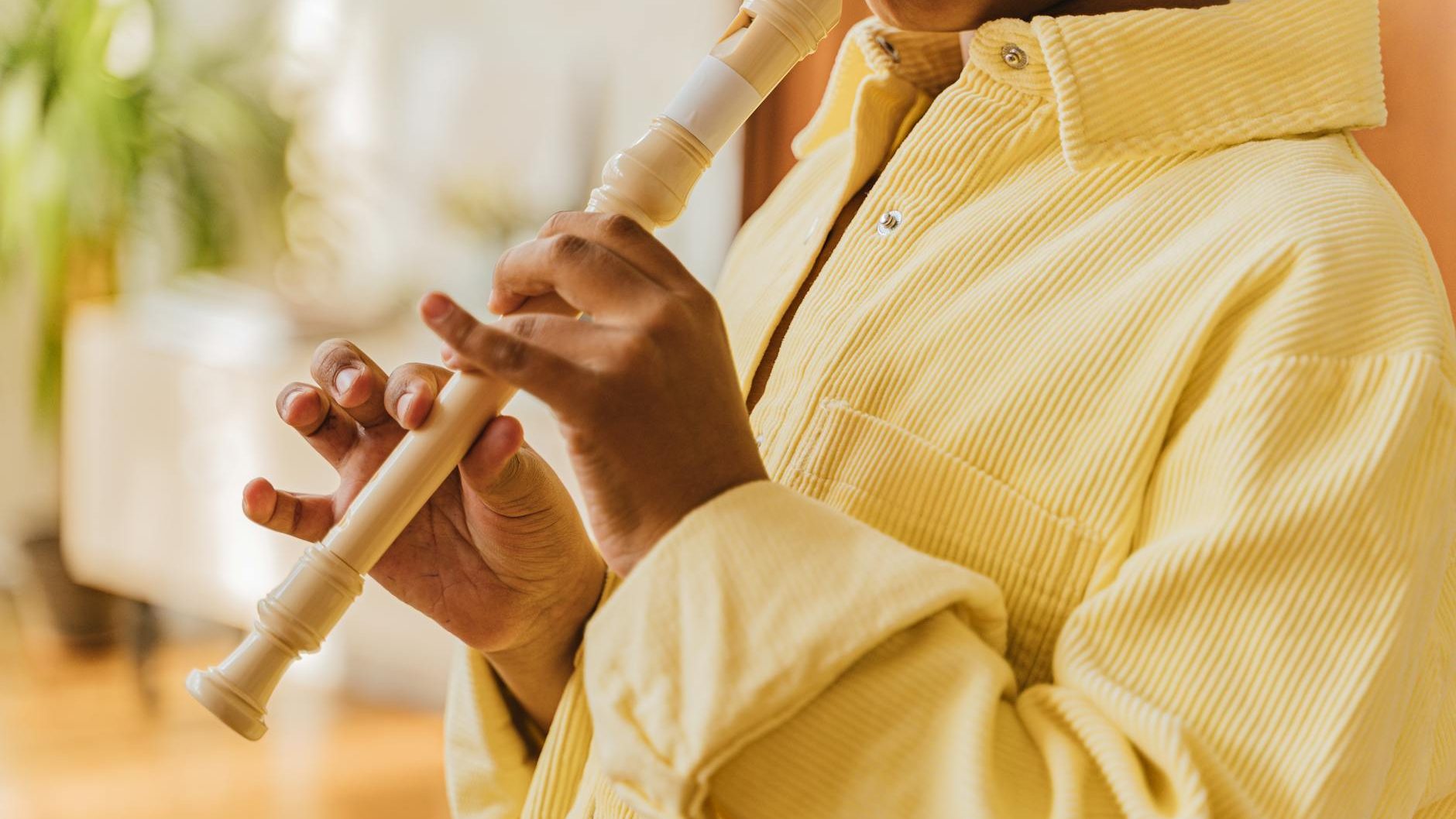
I fully agree with this approach, since I’d say ocarinas are even easier to learn than recorders due to recorders jumping entire octaves based on breath pressure, while ocarinas don’t—less squeaking is good! Some people think that saying an ocarina can be a stepping stone into music makes it be seen as only a stepping stone, and that is something we should be careful in how we discuss the instrument! It’s easier to learn than most instruments, so it absolutely can be a stepping stone for new musicians, but it isn’t exclusively one.

Similarly, many people pick up the ocarina later in life because of that ease of learning, as well as the small size and portability. Very few instruments are as portable as an ocarina, especially plastic ones. This makes the ocarina perfect for more casual musicians who might want an instrument they can carry at all times—I always have an ocarina in my backpack! This enjoyment of casual-ness often comes along with people who pick it up due to a love for Zelda as well (I was one of those people).

The Ocarina as the “Zelda Instrument”

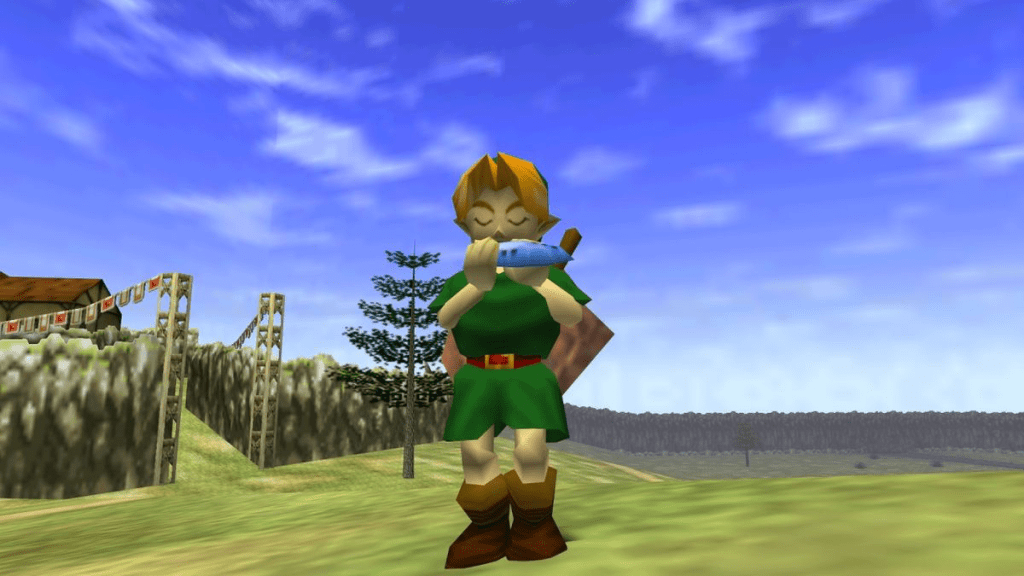
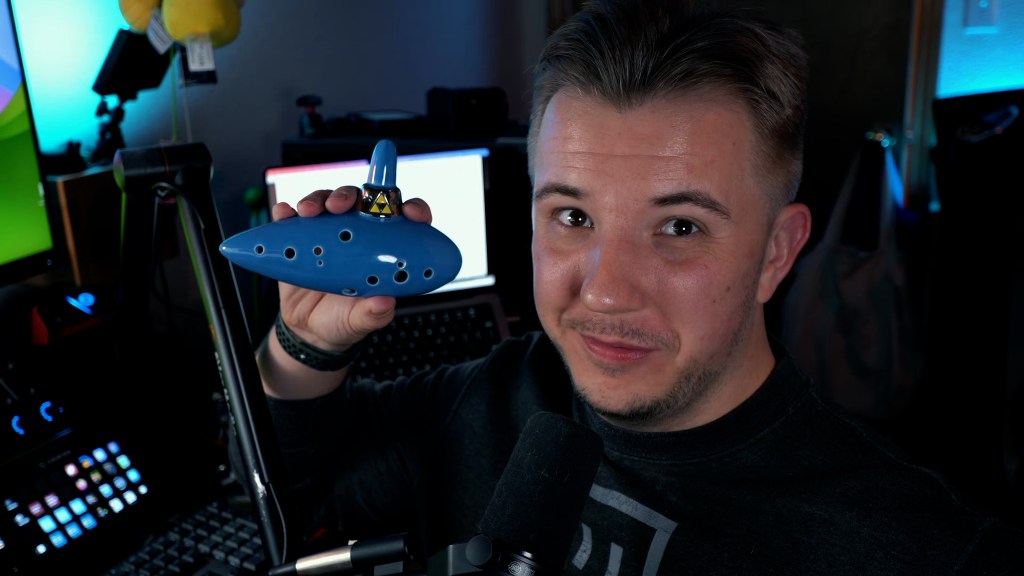
Outside of Asia and Italy, where the ocarina is more well-known, most people know the ocarina through things like Zelda. Consequently, Western ocarina communities outside of Italy tend to have deep ties to the instrument in that context. For example, my first ocarina was blue, plastic, and had a little zelda triforce on it, and I bought it at an anime convention. Most people I’ve met who have ocarinas bought them because of Zelda as well. The Zelda-ocarina connection runs deep.

This Zelda connection has been an amazing force for growth in the ocarina community over the years—possibly the primary source for growth—but it’s not without its drawbacks. First, many people literally think the ocarina is a fictional instrument made up for Zelda, but that’s just the fault of the ocarina itself being such a niche instrument.

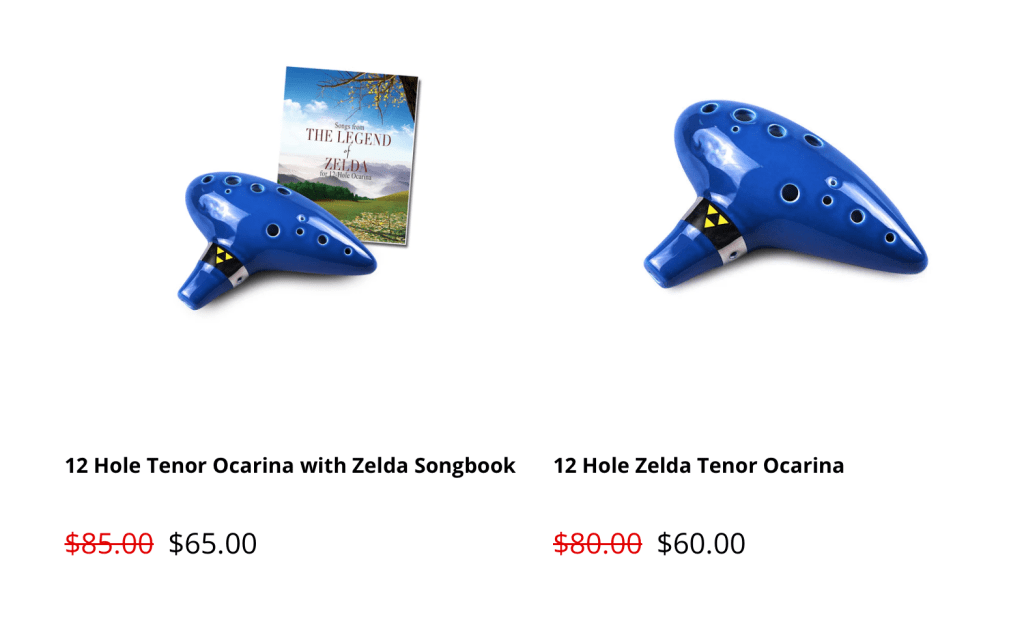
Amazon listings of mostly cheap, low-quality Zelda replica ocarinas

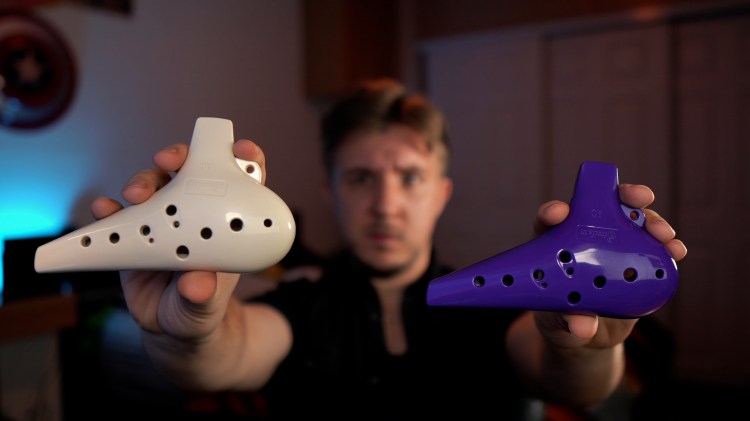
Second, many shady ocarina makers create subpar, out of tune, ocarinas of crap that happen to look like the ocarina of time, for the low price of $15. These are the top selling ocarinas on Amazon, and they are so incredibly bad that I’ve done two separate videos tearing them down. Their poor quality likely turns of new ocarinists from pursuing the instrument further, thinking they have no musical potential when in this case it was the crappy instrument! Legitimately, ocarinas of crap might be the biggest obstacle for the ocarina community to overcome, since they’re so awful and so pervasive—see my video on the vast varieties of them!

However, if not for the love of Zelda, we likely wouldn’t have the good ocarina makers, either. Without the demand for Ocarina of Time replicas getting people into the instrument, then learning to love the instrument, I bet most American makers and distributors would be out of business—remember Songbird’s ads in Nintendo Power?

Use code ANDY10 if you buy from Songbird by the way 🙂

I started with Zelda replicas, but now I have like 60 ocarinas, and only 7 or so are Zelda-related. Nevertheless, even with the help or hindrance from the Zelda connection, some would rather disconnect from Zelda entirely.

The Ocarina as a “Serious Instrument”

Ocabanda performing on stage at MAGfest in 2019

Some voices say that the more we connect the ocarina with Zelda, gaming, and other pop-culture moments that made the ocarina more broadly known, we’re doing the ocarina a disservice. Similarly, letting the ocarina fill the niche of the recorder as an entry-level instrument, it might make people take it un-seriously for professional musicians. Instead, they say we should focus on positioning the ocarina as a formidable instrument for classical and other more “serious” music in solo and ensemble settings.

I certainly can empathize with this approach. If the ocarina is only presented as a stepping stone, it might suffer the same fate as recorders in America—the cheap, annoying instrument I hated playing in elementary school—when recorders have a vibrant professional community as well. If the ocarina is kept entirely in the context of Zelda, and if folks only play video game and anime covers on the ocarina, then people might view it as a gimmick instrument for gamers instead of something that can be seriously used in “professional” musical settings, like orchestras, solos, or movie soundtracks.

There certainly is a lack of “serious, polished professional” ocarina music out there in America or central organization to find it. Not nothing—especially when events like OcarinaFest and more and more American ocarina ensembles are pushing the instrument forward—but not enough. Conversely, places like Italy, South Korea, Japan, Taiwan, and China already treat the ocarina as a serious instrument, and they basically established most of the standards we use for the instrument already. One way to bridge that gap might be to, at scale, improve the US community’s relations with these other countries with more established standards, but that’s just one idea.

That all said, viewing the ocarina as only a serious instrument alienates a huge amount of the community, as many ocarinists pick it up specifically as a casual instrument for its relative ease of learning or exclusively because of a love for Zelda. So why can’t all of these facets be true?

Let the Ocarina Be Multi-Faceted

Me holding a Spencer ocarina of time replica

The ocarina is a stepping stone instrument for many to understand music, then expand to or move on to more typical instruments. The ocarina is a casual instrument for many thanks to its portability and relative ease of learning. The ocarina is fundamentally connected to the Legend of Zelda in so much of the world, and the ocarina does need more work to be done to establish itself as a more serious, professional instrument as well.

All of these things are true. Denying how some people connect with the instrument on a casual or Zelda-loving basis only serves to alienate and divide the community. However, the ocarina is, and always has been a serious instrument. We still need more resources, high-level performances, and professional organization for the ocarina to be well-known and taken more seriously, but not everyone needs to take the ocarina seriously! Whether you only consider yourself a casual ocarinist, only got one for Zelda, only play gaming and anime music, or practice it like a professional, if the ocarina makes you happy, then you’re ocarina-ing correctly.

Let’s focus on spreading joy through music and art first. The serious stuff is important, and we do need more of it, but it’s useless if we gatekeep people from enjoying playing the ocarina in the first place. That’s why I always end my videos with happy tootin’ … so, happy tootin!

What Are the Limitations of the Ocarina?

One thing I mention often are the limitations of ocarinas. However, I don’t think I’ve ever explored all of them. Let’s do so!.

Ocarinas Have Limited Range

Compared to most instruments, single-chamber ocarinas have highly limited range at an octave plus five. While the range is equivalent to the average person’s singing range and does allow for a wide repertoire, it’s insufficient for a whole lot of music.

The solution we have is the multi-chambers ocarina, but it’s literally pasting multiple ocarinas together and introduces new challenges. Multi-chambers have a longer learning curve, and songs in registers with quick runs in the passaggio are difficult. Think runs that have a lot of D-E-F action, since D-E is usually the chamber border.

In singing, the passaggio refers to the break between chest voice and head voice (falsetto) in singing. Think when you’re going back and forth between chest voice and falsetto. This is similar to chamber switching, I’ll keep using that term to refer to the break between chambers in multi-chambers!

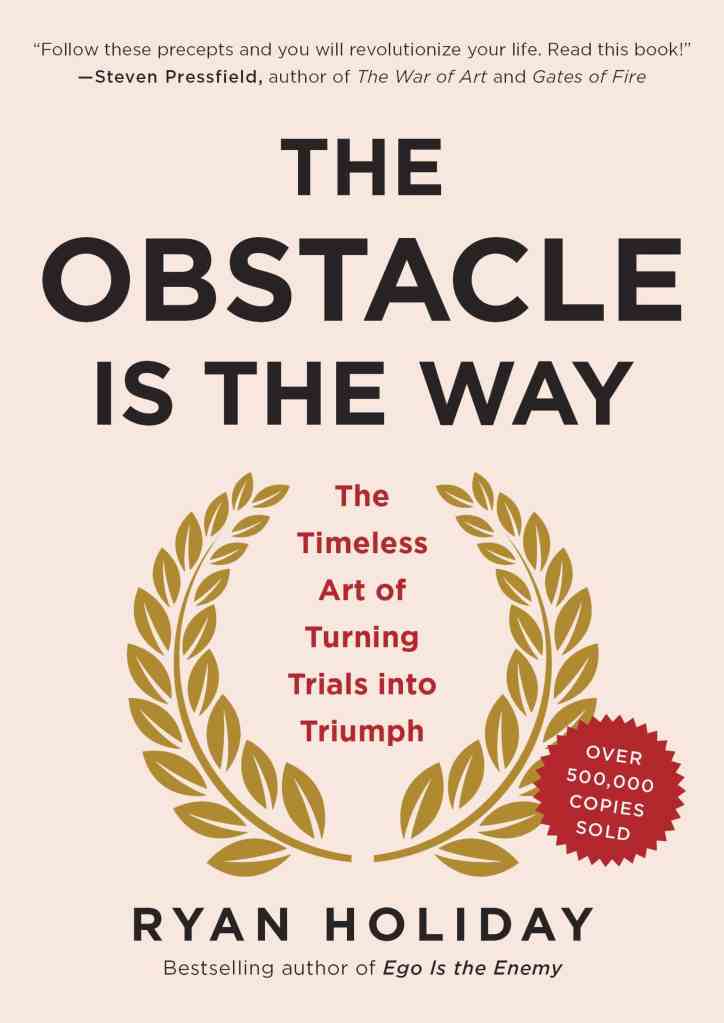
That all said, this limitation is part of the instrument. If you love the ocarina, you have to love working within these limitations—something, something, The Obstacle Is the Way.

Playing Dynamics and In-Tune Is Difficult

Dynamics and tuning are another major limitation of the ocarina. With the instrument, volume and tuning are tied together: more airflow on a given fingering makes the ocarina both louder in volume and sharper in pitch. This makes it incredibly difficult to play dynamics while remaining in tune on the ocarina.

In order to actually play dynamics in tune, you need to use alternate fingerings. This sounds intimidating, but it’s as simple as slightly covering an extra hole and blowing more to play more forte, or slightly uncovering a hole and blowing less to play more piano. Each ocarina will vary, and each note will likely vary too, but it’s just about the only way to play dynamics on the ocarina.

Why “just about” the only way?

Ocarina makers have actually attempted to alleviate this issue over the years via tuning plugs! These plugs typically have been placed on the fatter/flatter end of an ocarina and can be pressed in or pulled out to increase or decrease the size of the chamber of an ocarina, thus changing airflow requirements for tuning. However, this helps less with playing dynamics and helps more with adjusting overall breath pressure requirements and volume. If the entire ocarina is flatter, you can blow more to get more volume and compensate for that extra flatness.

These difficulties in tuning are even more difficult when considering inconsistent notation standards!

Multiple Notation Standards are Competing

At OcarinaFest last year, one panelist proposed a new standard for ocarina notation and nomenclature. While I love the idea of a cohesive standard for the instrument, there are already multiple competing standards for the instrument, with two main dominant formats:

  • The most-used standard is that used in Asia, with names like “Alto C,” “Soprano G,” or “Bass C”
  • Italy also has a standard with names. Alto C is “Do 3” in the Italian system, Soprano G is “Sol 2,” and Bass C is “Do 5.” Think solfeggio Do-Re-Mi-Fa-So-La-Ti-Do, and “Do” is the key of C, while “Sol” is the key of G.

Within these standards, some companies have taken liberties that cause further confusion, like STL Ocarina calling “Tenor C” for what is commonly called “Alto C” in the Asian standard. Tenor C doesn’t exist, though there is some room for debate as to whether a “Tenor” sub-range of ocarina should exist somewhere between Alto and Bass.

We don’t like this “Tenor” nomenclature!

My opinion would be to follow the standard we already dominantly use, which is the Asian one, but competing standards will probably remain as long as resources and information about the ocarina remain highly fragmented.

Resources & Information are Highly Fragmented

Currently, the most up-to-date resources and information regarding ocarinas reside in Facebook pages such as the Global Ocarina Community and The Ocarina Network. However, social media pages are frankly an awful way to maintain records and resources for a topic as vast as an entire musical instrument.

We used to have the Ocarina Network forum, which is mostly dead now, but that, too, also suffered from fragmented information within the site. Many key pieces of information, arrangements of music, and other resources are functionally lost in pages and pages of archived threads. If you delve in decade old threads, you might find some fun resources! …and arguments.

As I’ve been keeping up with David Ramos as he’s been working on his ocarina museum project, this fragmentation in information has actually been one of the biggest challenges in sufficiently providing information for each ocarina he has. Thankfully, his efforts will consolidate information about the instruments themselves and their makers!

However, when it comes to information, educational, and developmental resources, they are both fragmented and generally insufficient.

Ocarina Resources Are Also Insufficient at All Levels

Photo by hermaion on Pexels.com

Depending on who you ask, some key voices in the ocarina community may say that there is a lack of beginner, intermediate, or advanced resources, information, and sheet music.

Which is true? All of them.

If we think of the progression of the ocarina community as a funnel with a filter, a certain number of people who buy an ocarina will attempt learning to play it at all. Then, a certain number of those people will reach basic proficiency, and among those basically proficient folks, another portion will become intermediate, and so on, until we get more advanced players. I have no idea the exact numbers, but let’s say for every 100 new ocarina buyers, 30 become basically proficient; of those 30, 15 become intermediate, and of those 15, 3 become advanced. A 3% rate of buyer to advanced player (in this hypothetical).

At every step, insufficient resources means a lower likelihood of someone moving on to the next step. If new players lack cohesive introductory resources like a method book, teacher, or community, they’re less likely to reach basic proficiency. If proficient players lack sufficient resources—like more challenging, curated sheet music oriented to develop skills—they’ll be less likely to reach an intermediate level, and so on. We can raise those numbers for each step!

Currently, most resources are self-made, self-adapted, or done so for specific projects, like Ocabanda generating septet arrangements in order to have repertoire for performances.

Nevertheless, it’s still incredibly difficult to find resources for the ocarina that many other instruments have—think standards like the “Twenty-Four Italian Songs & Arias of the 17th & 18th Centuries” for opera singing, common jazz standards for various instruments, or common classical music for pianists. These establish a common foundation for musicians in a given instrument or genre, and the ocarina lacks these.

How Do We Fix These Issues?

Some issues are inherent to the instrument, and we simply must practice working around them to overcome them, such as using multi-chamber ocarinas and practicing alternative fingerings to play dynamics. However, the standardization, information, and resource issues are all very solvable.

I am actually working on a centralized ocarina resource website. It’s not published yet—expect an announcement by the end of the year—but I intend to make a single website that can be a resource to answer most ocarina information-related questions, as well as act as a reference page to discover other ocarina resources—think a one-stop-shop for becoming an informational expert on the ocarina. If David is aiming to catalogue and consolidate information for all instruments and makers, I aim to do the same with consolidating and standardizing information and education.

also aim to start a nonprofit to fund ocarina growth, resource development, music composition/arrangement, and more. This might make supporting your favorite instrument a tax write-off, too! Wish me luck!

And the best way to support me is simply to continue watching, make sure you’re subscribed, and use my affiliate links for Amazon or code ANDY10 on Songbird. I may do a Kickstarter or something in the future, but I am telling you about these ideas now to hold myself accountable! I’ve sat on this idea for around 8 months and really need to do something with it—put my MBA to good use!

What Is the “Breath Curve” of an Ocarina

I use the term “breath curve” all the time when making my ocarina content, but I realize I’ve never explained what it means. Let’s do that!

What Is A Breath Curve?

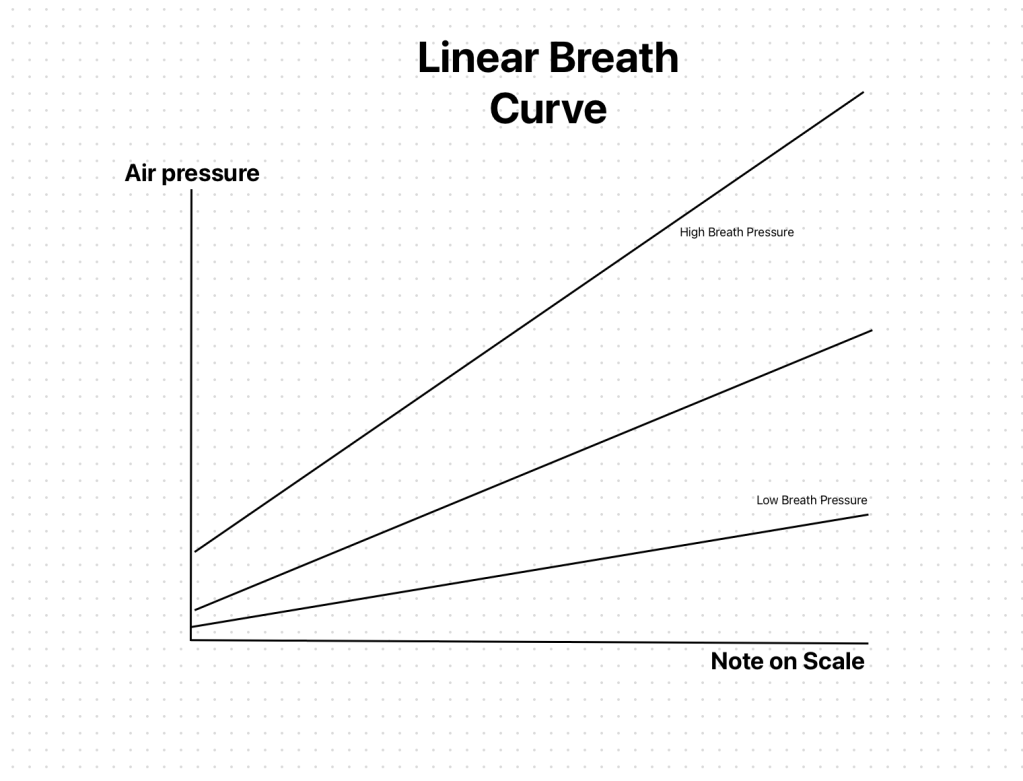
The breath curve of an ocarina is best shown as a graph; the X axis is the note you’re playing, and the Y axis is the amount of air you need to play that note. In general, the higher the note you play, the more breath you need.

We’ll go more in depth on charting these graphs later, but let’s start with the three most common types of breath curves!

Types of Breath Curves

Each of these descriptions is an approximation, and I don’t have the scientific tools to actually test these.

↗️ Linear Breath Curves

A linear or near-linear breath curve has a relatively even increase in air needed per note you go up the scale.

A linear curve or a curve approximately close to it (e.g. slightly concave or slightly convex) is most common and generally considered most intuitive to play, especially for beginners. It does indeed feel most natural to increase your airflow as you ascend the scale, unlike…

↔️ Flat Breath Curves

This kind is uncommon, but it helps for reference.

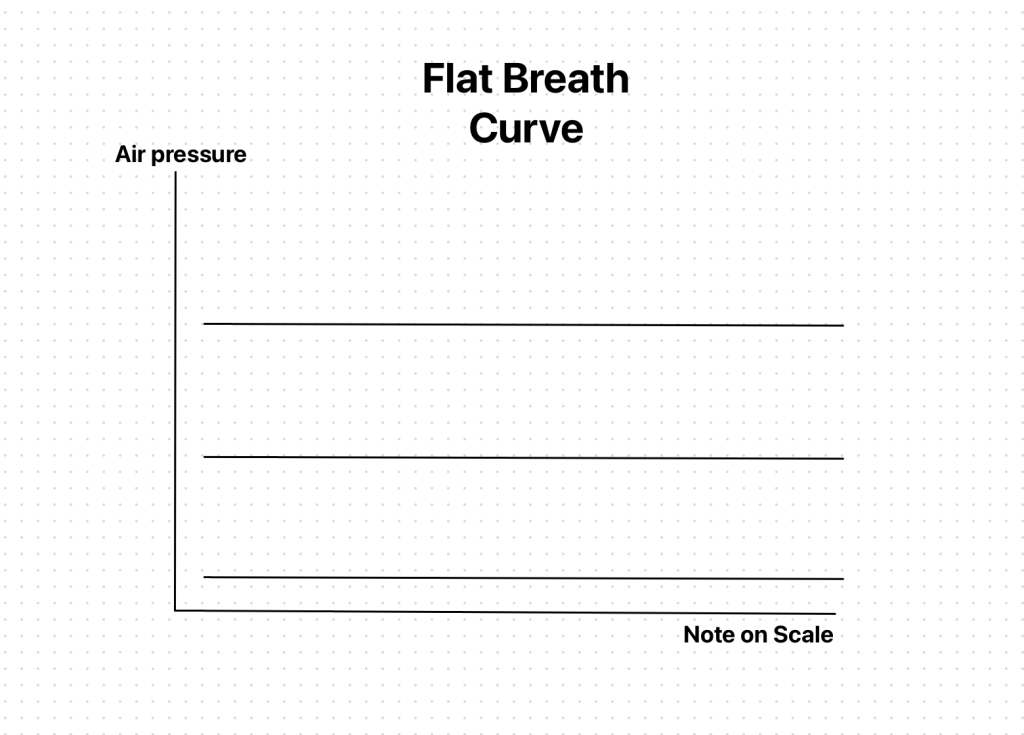
Some ocarinas are tuned to require the exact same airflow for each note; I don’t own any ocarinas like this, and they are rare, but they exist.

To compare to a linear breath curve, each note above the lowest is tuned more and more slightly sharp so that, for example, a if blowing a high C on a linear curved ocarina, that same air pressure would be incredibly sharp on a flat curved ocarina.

📐 Concave Breath Curves

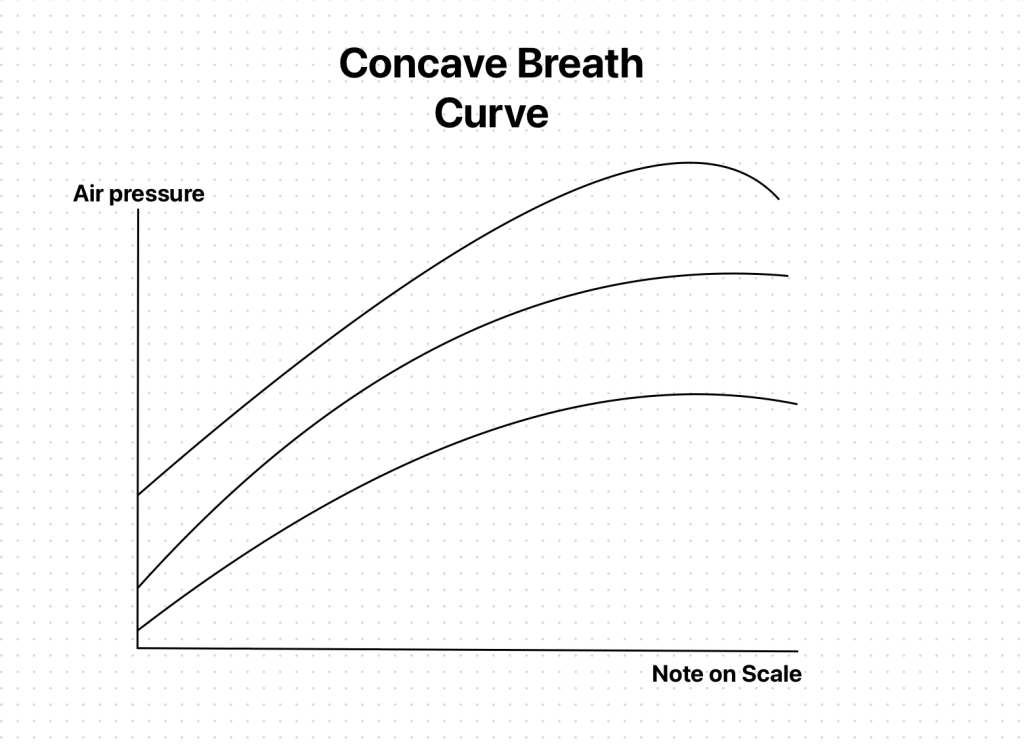
A concave breath curve requires more air as you ascend to a point and may flatten or actually have a drop in air pressure at the highest notes, like the Night by Noble, where the high F may require less air than the high E.

Concave is less intuitive than a linear curve, but it’s not too hard to adapt to. Many Alto C ocarinas have somewhat concave curves, as they either require that you use the acute bend or blow less air to get a clear high F.

An ocarina with a concave breath curve does not mean the ocarina is bad or poorly tuned; it just means it may be less beginner friendly.

💨 How Does Overall Breath Pressure Connect?

A high-breath pressure ocarina with a linear breath curve would have a higher “slope” (how much more air needed per note) a higher “Y-intercept” (the amount of air needed to play the lowest note in tune), or both

Conversely, let’s use a low-breath pressure ocarina with a concave breath curve, the Night by Noble. I am not good enough at math to make an equation, but you can refer to the previous graphs.

The Night by Noble starts out at a low Y-intercept with a relatively linear slope. Then, it flattens around the high E and dips a tiny bit down for the high F; it concaves downward while also having low breath pressure requirements to begin with

⚠️ How a Breath Curve Can Make an Ocarina Out of Tune

When we describe an ocarina as out of tune given these 3 categories, outside of when notes are so far out of tune that they’re beyond saving, it usually means the ocarina doesn’t fit one of these curve models.

For example, if an ocarina feels linear in its breath on C through G but then requires less air on the A, then more air on the B, that’s poorly tuned! There’s no intuitive shape to the breath curve.

If an ocarina follows one of the expected breath curve models, you know what to expect to do with your airflow as you ascend a scale or play wide intervals. An ocarina with an unintuitive or unpredictable breath curve would be out of tune for most players and require a lot of unnecessary extra practice to master.

⭐ Which Curve is Your Favorite?

Let me know in the comments! I assume most of you will prefer linear. If anyone has a flat-curve ocarina, also let me know where I can get it for a showcase. Also, let me know if there are other clear categories of breath curves you’ve encountered, with an example ocarina, so that I can amend this post in the future—please do so via comments on the YouTube video!

Make 2024 a Year of Less

I have too much stuff. I buy too much stuff.

Chances are, if you clicked on this post, you do too.

To solve this, I’ve decided to do a year of less: getting rid of what I have, and controlling my consumerism. We’ll discuss my four reasons why and two actionable methods I’m using to do so.

1. Make my Room More Habitable ✅

I have the total accumulated possessions of a 26 year-old man stuffed into his childhood bedroom. Granted, I have gotten rid of a lot over the years, and my room is nowhere near as messy as it could be, but I have too much stuff.

For example, prior to a couple weeks ago, I had to stuff my clothing drawers down just to close them. This is how much I’m going to discard or donate from just few of them. I have a lot more work to do!

I have so much stuff that I don’t want to deal with it, and whenever I move out, everything that remains will be my family’s problem… Oh no.

How: Swedish Death Cleaning… but for Moving Out (Eventually) ☠️

I will be finishing my MBA program this summer, and I will hopefully be able to find a good-enough paying full-time job (or grow enough on YouTube? 👀) to be able to move out.

The philosophy of Swedish Death Cleaning can be summarized as follows: 

When I die, do I want to make my loved ones deal with this?

I don’t intend to die. Ever.

Okay, at least not for a very long time.

However, I will be moving out from my parents’ place sooner rather than later (hopefully). As mentioned, I have a lotof stuff in my room, far more than I’d ever want to take with me when I move out.

As such, my Swedish Move-out Cleaning mantra is as follows:

When I move out, will I want to bring this or save this? If not, do I want to make my parents deal with it?

With that perspective, a whole lot of things I’ve been holding onto become a lot less precious, so I’ll be discarding or donating a lot of things this year! The goal is one area per week.

However, I don’t think I will get rid of any ocarinas. They will all come with me when I move—but that passes the rules of “When I move out, will I want to bring this?”

2. Challenge my Default Consumerism 💸

It’s so easy to spend money—buy that new gadget, try that restaurant, get another drink, add that subscription—but consuming begets consuming.

In fact, whenever we get more, we get used to that level of more and revert to a baseline level of happiness. Then, you keep wanting even more and the cycle continues.

That’s called the Hedonic Treadmill or Hedonic Adaptation, where humans have a tendency to revert to a baseline level of happiness even when major positive or negative life events happen. That also means you can reverse this process and get used to less while staying just as happy.

As such, I want to revert to a lower level of consumerism-related happiness and do more things that are creating or experiencing rather than consuming:

  • Making more videos instead of spending more money
  • Finding free/cheap/productive recreational activities with friends rather than just eating out and going out for drinks
  • Appreciating the things I already have more and finding new ways to use them

On top of that, I also want to get abs within the first 3-5 months of the year, and consuming usually entails consuming delicious but unhealthy food. Consuming less will certainly help!

Yup, it’s my buff grandpa era.

3. Control my Finances 💰

I am fine financially, but since my layoff from my last full-time job, I’ve all but ceased saving money. I make enough money and have low enough expenses that I can save money if I have some discipline with my spending.

I don’t need to buy banh mi for lunch every work shift I have. I don’t need to buy every new piece of tech I want, and I certainly don’t need to say “yes” to every invitation to go out to eat or get drinks I receive.

Financial How: Doing a “Low Buy Year” 🙅‍♂️

This is inspired by fellow YouTuber Grace Nevitt, who makes videos discussing doing a “No Buy Year” in which all spending is prohibited other than absolute essentials and a few permissible categories.

In her model, you first express your goals for why you’re doing this, then list items in three categories:

  • ✅ Green Light (absolutely allowed, such as rent, groceries, and replacements of essentials)
  • 🟨 Yellow Light (allowed in specific scenarios)
  • 🛑 Red Light (not allowed).

I highly recommend you check our her channel for more insight on the challenge.

I’m following this to a lesser extreme, since my “red light” items are not allowed unless certain conditions are met, like no new subscriptions unless it has a clear return on investment, or no new clothes unless I hit my goal weight anddiscard or donate 2-3x as much.

Some more examples include…

  • ✅ Only eat out once a week, with two monthly floaters for surprises; same for cafes
    • Ideally, it should be a social outing. If someone else is paying, however, it doesn’t count, other than needing to be mindful diet-wise
    • Food out is probably my biggest controllable expense, too, so this rule will still let me eat out with friends, but it’ll prevent nearly all of my unnecessary food orders
  • ✅ Replacements for something damaged I use all the time *if *****I don’t have an alternative
  • 🟨 No new tech unless it’s for a specific, needed, tax write-off-able purpose that I cannot emulate for free with things I already have
    • e.g. if I improve my filmmaking and need a better gimbal or dolly
  • 🟨 Unexpected meals out are okay IF I have little/no time between work and getting to MBA classes and it’s relatively healthy and I am unable to meal prep
    • If I get a full-time job, I can afford it, and it’ll be an essential-ish expense. Chances are I’d be making frantic dashes from the office to campus regularly
  • 🛑 No buying books unless it’s for school, or I check the library first and finish at least one book I already own (if it’s not on the library and I’d need to buy it)
    • I read a lot, and I accumulate a lot of books on Kindle I will probably never read. If I am tempted to buy a book, I can borrow it from the library, which will force me to read it within three weeks. Conversely, just buying it removes any obligation to read it promptly.
    • I subscribe to a newsletter called BookBub, which alerts you to books in categories you select that are super cheap, like $1.99. I end up buying maybe 50+ books per year through this and only reading a few of them, and that’s $100 per year I could save, on top of other books I impulsively buy.

I don’t think I will have 100% adherence to these rules, at least ones that could dramatically impede on my social life or business, but I aim to be pretty close! And 90% adherence to a low buy year will still result in 90% more mindfulness on my consumerism.

4. Resist Future Lifestyle Inflation 📈

I have been quite undisciplined with my finances for the last year and change largely because I’ve had such a safety net. When I get a good job or otherwise earn more money, I cannot inflate my lifestyle! I was incredibly financially disciplined when I had a salary, but it’s gone away.

I’ve been living the excess free cash problem of finance: when a company has too much free cash floating around, they often spend it foolishly. It’s a reason why lottery winners often rapidly go broke even after winning many millions of dollars. 

Gosh, I cannot escape concepts I’m learning in my MBA course material!

I realize I, too, have been doing this on a smaller scale by freely spending most of what I earn, and that’s basically grown to match all additional money I’ve made. My lifestyle has inflated with my income! Oh no!

By practicing financial discipline now, I’ll be better equipped to do so when I make a bajillion dollars a month. If I can budget to max out my Roth IRA contributions and add to my savings this year, imagine how well I can save when I make 3 or 5 times as much, even if my essential expenses rise too.

If my income inflates, I want my savings to inflate with it, not my lifestyle.

How Can You Live With Less? 🫵 👀

Consumerism is our culture’s default way of being, but we can challenge that!

I am not necessarily advocating for strict minimalism and eliminating everything you don’t need, but I am instead advocating for trying to understand what is essential in your life, whether that’s for necessity or happiness:

Be mindful both of what you add and what you subtract!

Author Greg McKeown says in his book Essentialism:

“Essentialism is not about how to get more things done; it’s about how to get the right things done. It doesn’t mean just doing less for the sake of less either.

It is about making the wisest possible investment of your time and energy in order to operate at our highest point of contribution by doing only what is essential.”

Essentialism: The Disciplined Pursuit of Less, Greg McKeown

How can you live with less this year? Is it getting rid of things, consuming less, or a bit of both?

No matter what you do, make sure you know why you’re doing it. I want to manage my space better, be considerate to my family, and control my finances.

Let me know in the comments why you want less and how you plan to do it!

Mistake-Proof Your Life With This Japanese Concept

Yes, we’re clickbaiting Japan. No, this isn’t some white guy misinterpreting a Japanese concept. It’s an MBA student correctly interpreting a business concept!

What Is Poka-Yoke?

Poka Yoke is a Japanese concept all about mistake-proofing a process. It comes from the term ポカを避ける (poka wo yokeru), where “poka” means “error” and “yokeru” means “avoid.” Abbreviated? Poka-yoke. Fun fact, it was also known as baka-yoke, or “fool-proofing.”

Screenshot from video showing the meaning of poke-yoke

Poka-yoke was coined in the 1960s by Japanese industrial engineer Shigeo Shingo in the 1960s, and a major point of it is to make inevitable human errors less inevitable through prevention at the source.

Some examples of poka-yoke include handrails on stairs to prevent falling, the need to brake before switching your car out of park, seals on medicine to prevent tampering, or even checklists to make sure every step of a process is done correctly and in order.

Business Application – Total Quality Management

Poka-yoke is a popular way of thinking in total quality management, where the goal, as the name suggests, is to maximize the quality of your business by managing the processes of the business.

Photo by ThisIsEngineering on Pexels.com

In business, poka-yoke helps to prevent mistakes from happening, and this can range from steps in manufacturing, supply chain, or even at the consumer-level with product design. And the whole concept of bulletproofing a design can even apply outside of business, too!

Can you tell I’m studying an MBA? Is it just me? Gosh, even when going on dates, I’m using terms like “return on investment” when flirting. Send help.

Anyways, that is the gist of poka-yoke: mistake-proofing a process or product.

Personal Application – Total Quality Life

If poka-yoke processes in business, service, and manufacturing are about eliminating the chance to make mistakes, how can you do the same in your own life?

This reminds me a lot of the ideas in Atomic Habits by James Clear, where one major lesson is to design your space to make bad habits more difficult to do and good habits easier.

Man stretching in bed with caption "me when I good habit"

For example, unplug the TV and put the remote away when you’re not watching it, wear your gym clothes to bed to be ready for an AM workout, or delete apps from your phone you spend too much time on. That said, for some people, especially if you’re neurodivergent, creating obstacles can just make these things take more time and have the opposite intended effect—therefore only apply what actually works for you!

Lets think of a few ways to add guard rails to your life to help ensure success while minimizing mistakes!

Designing Your Phone For Success

I use a couple apps on my phone to limit my phone usage without total restriction or app deletion. First, I use blank spaces and have a home screen that is exclusively widgets. It takes a bit to set up, but it makes your homescreen clean and focused on both Android and iOS.

blank spaces app website

Another app I appreciate as a personal poka-yoke is called One Sec, which runs an automation each time you open certain apps. It forces you to pause and take a breath before opening these apps and can prevent a lot of mindless app browsing on things like Instagram, TikTok, or YouTube.

one sec app website

That said, if my intention is to open these apps and I want to quickly shoot an Instagram story or something, it can be a bit annoying. However, I’ll take a small annoyance for being more generally present. One Sec also works on desktop, though I’ve only tested it on Safari. One Sec is not free, but it’s a low one-time fee, which can be waived if you send the developer a compelling reason within the app. Based.

Otherwise, I’d recommend deleting apps you really want to use less and setting up One Sec for apps you still want to have while using less.

Designing Your Space

Another concept in operations management is layout design—how can you design a space for maximum efficiency, or in this case, to minimize errors? This usually applies to things like how Chipotle can assemble a custom-to-order burrito in seconds or a factory can produce goods as quickly as possible, but how can you arrange your own space for success?

For example, instead of leaving your running shoes in a closet, leave them by your door to reduce friction to starting a run. You could also charge your phone at least out of arm’s reach when in bed so you don’t doomscroll for hours before sleeping—advice I especially should follow. Or, you could make a checklist of habits you want to do every day so you don’t forget any.

Photo by Aman Jakhar on Pexels.com

Otherwise, conceptually, how can you arrange your room, furniture, stuff, whatever to minimize friction from the things you want to do? And how can you add friction against the things you want to do less?

I don’t have much say in this personally, as of now, since I only really control the bedroom I live in and work from, but within my limited space, I have small things set up:

  • having my exercise shoes by my weights and by the door
  • generally leaving my workout clothes out the night before
  • attempting to have a clear desk most of the time
  • closing most of my browser tabs before closing my laptop, and more.

Is Poka-Yoke Cultural Appropriation?

A major pet peeve of mine is when, usually white or otherwise non-Japanese, YouTubers and writers mystify Japan and make videos or write books like “Ikiru: The Japanese Concept of Living that Will Change Your Life” when 生きる(ikiru) is literally just a verb for “to live.”

Is poka-yoke and its emphasis in business education cultural appropriation? I’m not the right person to answer the question. However, it does truly have Japanese origins, and I googled it in Japanese and saw Japanese business articles talking about it. Moreover, seeing how “poka-yoke” is an abbreviation—knowing how much Japan loves its abbreviations—that added even more credence of legitimacy rather than weebs in business.

This post started during an operations class lecture, and the title emerged when I realized you can easily clickbait people with “This Japanese Concept Will Change Your Life” content—look at the obsession with things like Ikigai and Kaizen. These are useful concepts, but don’t froth at the mouth over them just because they’re Japanese in origin!

ごめんなさいけどごめんしない!(translation: sorry-not-sorry)

How Can You Mistake-Proof Your Life?

It’s impossible to be perfect, but using poka-yoke, you might be able to reduce hiccups in reaching your goals. How might you mistake-proof your life? Let me know in the comments. You gotta yoke the baka in you with poka-yoke. Why am I like this

Reset Your Life From Zero This Year With Zero-Based Budgeting

It’s been a while since my last post, oops! A lot has happened over the last few months, like running a half-marathon, going to Ocarina Fest in Texas, seeing my all-time favorite band from childhood in concert, going back to school, being best man at my brother’s wedding in Ireland, and sadly my cat Charlie passing away at 14 years and 8 months old.

He was the best little dude.

But Let’s Rewind.

In summer 2022, I got laid off from my last full-time job, along with the rest of my team. A lot of the time since then has sort of felt like treading water, putting in effort for something to happen but ultimately not going anywhere. And I was trying to make thing happen, sending hundreds of job applications, doubling down on YouTube, doing freelance work, and more. But not much was changing.

Photo by Andrea Piacquadio on Pexels.com

Clearly, I needed to make a major change, but fortunately or not, changes were going to happen regardless.

In April, my previous serious relationship ended. We were together for almost 2 and a half years, but between circumstances out of our control, my efforts to fix things backfiring, and some other issues, it didn’t work out. That forced a first reset, and I’ve improved myself a lot since then—namely getting in really good shape, such as reaching an 800 lb total in the powerlifting trio (bench press, squat, deadlift), running a half marathon, and getting fast at 5K runs—on top of maturity and other stuff.

Then, something I chose to do, in August, I started studying my MBA. I must say, this has been one of the biggest boons to my mental health with having a solid structure in my life again, making new friends, and feeling my skills improve as a professional. On top of that, I might even get a second overlapping master’s degree in finance, but I’m still deciding on that.

Zero-Based Budgeting

And getting into that business mindset again, I’ve been applying literal corporate budgeting concepts to my life: Historical vs. Zero-Based Budgeting.

Basically, historical budgeting is evaluating changes only as they come—a new expense in finance versus considering adding a new habit or something in your personal life. It also applies to small, incremental changes for existing things—invest 10% more in a stock or spend 10% less going out. If you have a great setup and only need small changes, this can work well!

Photo by Pixabay on Pexels.com

However, it has its weaknesses; sometimes decisions that were beneficial in the past don’t serve you anymore; investments in crypto may have seemed appealing for a company 3 years ago, but you might not want to hodl. Going for regular drinks with friends might have been great for your social life and mental health once, but it might also be taking its toll on your health and finances.

Zero-based budgeting evaluates not only changes and new things, but you also treat all established things like they’re new. You start with zero, then you evaluate each item. This can be time consuming, but it’s incredibly worthwhile. Most people have a bias that you must add something to solve a problem—buy a new product, work more hours, try a new habit—when often times subtracting what doesn’t help you will help you that much more.

A zero-based budget for your life makes it a lot easier to do so, critically evaluating everything. It’s like Marie Kondo’s concept of cleaning everything, then holding each item to see if it sparks joy. If yes, keep it; if not, discard it.

Let’s Do It

Let’s make a “budget” of everything in our life. This can be broad, like “work” and “health” and “hobbies” and the like. List your things, then list how it helps you or makes you happier, or how it stresses you out or otherwise harms you.

I’ve already gotten started listing everything currently happening in my life, such as my MBA program, fitness goals, and work. I also have a section for things I am considering adding.

Now, let’s see my final result of what I’ve chosen to keep or add, at least for the next few months.

Last, we have our “budget” and an additional section on things I don’t need to make a decision on yet.

As you see, it’s quite similar to the previous “budget,” and that’s okay and normal! The exercise isn’t necessarily to make you completely change your life, rather to evaluate not just changes, but what’s already established too. Then, I’d recommend making historical budgeting tweaks every month or quarter, just to keep yourself accountable, aware, and open to course correction.

Obviously, making a spreadsheet alone won’t change your life, but a spreadsheet can make yourself aware of what you want to apply effort to change. If you want to copy my spreadsheet, I have a link right here—just make a copy for yourself.

Moving Forward

This exercise also showed me where I want to be applying effort but haven’t been doing enough, and that’s primarily on YouTube and on my blog. I kind of disappeared for the second half of 2023. Even if it’s only one video every two weeks and some TikToks, I’m going to be regular making content again. I can’t thank you all enough for the continued support, and if you’re new here, go ahead and subscribe!

Sometimes incremental change is enough, but often, a complete reset is what you need. If that’s what you need, I hope this article and video helped.

Get Out of Your Own Way

Fear of rejection, fear of failure, fear of success even—we all have our reasons for not pursuing what we want. If we don’t try, we can’t be rejected. If we never try to succeed, we can’t fail.

Many of us are in our own way.

A “Gifted” Kid, An Anxious Adult

It all began in my childhood, but doesn’t everything with thought patterns and mental stuff? I was a “gifted” kid growing up. Academic stuff came easy to me, and even through college, I never had to try really hard. I definitely worked hard, especially in college, but that was more a question of total workload than difficulty of workload.

Photo by Max Fischer on Pexels.com

But anyways, as a “gifted” kid, there emerges a strange thought pattern: you believe you’re smart. For relatively easy things, this is great for helping you excel! But for things that, no matter your intellect, cannot be done well without a lot of effort, it creates a conundrum:

If I do my best on this and I’m not amazing at it, that challenges my self-image as a “smart” person. Therefore, if I self sabotage and don’t try my best, if I don’t do well, I can just say “oh, I didn’t try, it’s fine”

It’s fear of failure, but moreover fear of success.

Fear of Success?

Obviously there’s fear of failure, but direct fear of failure is often met with avoiding that failure, working to prevent or overcome it. Fear of success is a manifestation of fearing failure.

You self-sabotage to prevent yourself from succeeding so that your identity doesn’t have to be challenged if you try hard and still fail, as well as fearing the change in identity of rising to a higher standard. If you succeed not because of intelligence, but because of hard work, that also challenges your identity!

Photo by Andrea Piacquadio on Pexels.com

It’s something I’ve been aware of for years and have actively worked on—I read Mindset by Carol Dweck and believe in growth mindsets but still drift into a fixed one. That’s because even as I improve myself, the fear and resulting self-sabotage are still there.

Up until fairly recently, I’ve struggled with losing weight. I know what I should and shouldn’t do or eat, but prior to recently, I’d like, get McDonald’s and beer even though I’m “dieting” so I have an excuse when I inevitably don’t hit my goals—it wasn’t my inadequacy, it was the junk food! I can’t intellect my way to a lower weight either when the only solution is discipline.

Photo by Polina Tankilevitch on Pexels.com

The same goes for the job hunt and pitching my freelance services—if I think I’m “overqualified” for a job and don’t apply, it guarantees I never have to worry about not getting the job. If I over-analyze any potential client, I can manifest 50 reasons not to shoot them an email, and if I never try I can’t be rejected.

If I know I’m not doing my best, I never need to question that sometimes my best isn’t enough.

Getting Out of My Way

I recently went through something in my personal life where I tried my best and still failed. I was in an amazing relationship for over two years, but it unfortunately ended. There were issues we were working through, and I was willing to do whatever it took to fix things. I tried my best, and it wasn’t enough—and honestly trying my best, I applied that effort to all the wrong things and just made it worse, but that’s enough detail on my private life.

Photo by cottonbro studio on Pexels.com

But you know what? I survived. It sucked, especially knowing it was mostly or entirely my fault. While that heartbreak will probably be something that takes months or years to fully heal, I’m still standing. I hope she’s doing well, too.

This is to say that if I can put it all on the line and survive failing spectacularly and miserably in my relationship, why do I care about failing at less important things? Why can’t I get out of my own way? If I can survive frankly the worst heartbreak I’ve ever experienced, I can survive any rejection or failure.

So, I’m getting out of my own way. I’m not going to say I have suddenly changed everything about my life or how I think, but I’m trying. I’m setting goals and doing better.

How I’m Getting Out of My Way

In my freelance writing with MakeUseOf, I am aspiring to be the top contributor on the site for the month, and guess what? I’m probably not going to make it, but I’ll make decent money and prove something to myself in trying.

With my freelance marketing and content services, I keep loving the idea of clients, but because I fear both them saying no as well as the workload if they say yes, I just freeze when it comes to pitching. Thus, I am going to pitch 10 potential clients in 10 days—I’ll be making that into a video/post, so hold me accountable!

Photo by Vlada Karpovich on Pexels.com

When it comes to playing the ocarina, I tend to avoid playing challenging songs or giving actual solo performances, not just because I’m a perfectionist and don’t enjoy some of that process, but also because I’m afraid that if I try my best, you all won’t like it. Welp, baby steps, because in my ocarina reviews, I’m throwing in more challenging songs for my sound samples.

On my YouTube channel (and blog), I often get in a good rhythm, upload super consistently, lose that rhythm because this fear holds me back from doing my best, fall behind, and miss around a month (or more) of uploads. Now, I’m working to develop at least a 2-week video backlog on long-form videos.

Photo by Melike Benli on Pexels.com

I’m talking as if this is in mid-June because as of writing this, it is. This post and its accompanying video were uploaded on July 1st but written on June 13th, and the video was recorded on June 17th. This backlog will also give me flexibility to occasionally do more challenging videos as well as free my schedule for my other goals.

Seeking Discomfort

All these examples I’m giving are, as Yes Theory puts it, to seek discomfort. Nothing could be more uncomfortable and painful as heartbreak, so really, I should have nothing to fear. It’s time to try my best, even if I fail 100 times along the way.

Next, consider watching my video or reading my post on making my own work experience. I pursued YouTube largely because I wanted a more independent career, but I was always hesitant to do other things for, you guessed it, getting in my own way. With my horrible luck in the job market, eventually the independent career path became the apparent safest, so see how I’m pursuing it!

Making My Own Work Experience

The Job Hunt Sucks

Unemployment in america is low … but I live in literal Silicon Valley. You’ve heard of all the tech layoffs. I was impacted by that when AVerMedia laid me off!

Those layoffs have made the job market SUPER competitive—a hiring manager is definitely going to lean more towards someone with Google or Meta on their resume than AVerMedia.

Photo by Tim Gouw on Pexels.com

I’ve had plenty of interviews over the last year, but invariably, I’m told, “sorry, we picked someone with more experience”

So eff it, I’m making my own experience.

This whole strategy was really inspired by reading on Stoicism, specifically some of the books by Ryan Holiday. The whole concept of The Obstacle is The Way really resonated with me here: what’s in your way is the way. If the path is obstructed, that informs what the new path must be.

If the job market is prohibitively competitive in my area, what can I do? The job market is the obstacle, so my my way constitutes:

  • Creative projects on YouTube
  • Freelance work for clients
  • Education in grad school

But first, how does that fit with my career objective?

My Career Objective

My work experience is in social media management, influencer relations, content creation, copywriting, and marketing in general.

What do I want to do with that?

First, I do enjoy each of those things. I wouldn’t be opposed to dialing in on any of them. However, if you go a step higher than these roles, they all fit in to the world of creative marketing and branding.

In the long term, I want to be a more strategic creative marketing or branding person. That helps determine the way a company operates its social media, how it works with influencers, what content it makes, and what the overall vibe of the marketing is.

Creative Projects

In many interviews I’ve had, I’ve been told my YouTube channel is exactly what sets me apart—it shows I am a creative person who can build an audience, use creative tools, be a self-starter, and hold myself accountable in work.

Photo by Till Daling on Pexels.com

Making videos and running a youtube channel requires a lot of skills, ranging from…

  • Creativity
  • Writing
  • Videography
  • Technical camera skills
  • Video editing
  • Social media management
  • Content marketing (you literally need to make your content marketable)
  • Public speaking
  • Graphic design for thumbnails

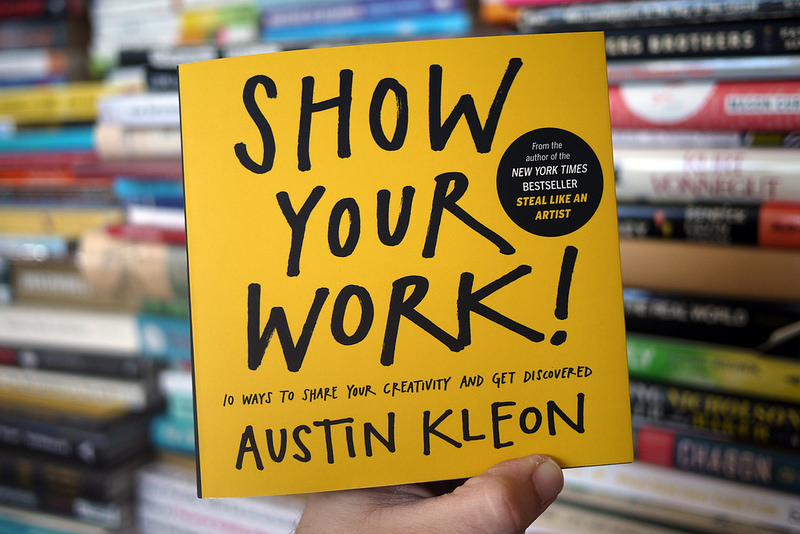
I could go on, but a YouTube channel can be a great way to Show Your Work, like the book of the same name by Austin Kleon suggests. The gist is, if you share your skills and passions, chances are, it’ll bring you opportunities.

Opportunities aside, I make a few hundred dollars a month from YouTube-related income while having close to 5K subscribers! That’s ad revenue, people using my Songbird Ocarina code, Patreon, and Amazon affiliates—this won’t replace a job, but it’s WAY more than nothing.

If you can make content relevant to your job, or if the act of making content is relevant work experience, make videos!

Freelance Work

To actually make money, I’ve been doing freelance work. I’m making sure the work I’m doing is in line with my career objective, so if you pursue this path, what work can you do to give you good experience?

Social Media & Content Creation

First, for clients, I do freelance social media and content creation—this is directly in line with my career goals! I have a few clients I work with, ranging from just editing their videos to managing their social media presence.

Photo by Pixabay on Pexels.com

I charge a LOT more hourly than I’d get working a full time job, but it’s just a bit comparably inconsistent—I only have work if clients give me work, and I don’t get benefits However, this focus on content and social media is the exact kind of work I want to do, and things like this tend to have a snowball effect—the more clients I get, the easier it is to get clients

On top of that, I gain skills understanding multiple business models, doing a wide variety of social media and content work, pitching my services to businesses, and frankly learning to make money rather than just do a job—if I want to be a strategic marketer, it helps to create lots of experience building other people’s strategy and executing it.

Given the relative inconsistency here, I also have work I can more or less do whenever I have down time

MakeUseOf.com Tech Journalism

I also write about creative tech, content creation strategy, and more. This gives me a paid portfolio of work to show I know what I’m talking about when it comes to content—I can say I know my stuff, but it’s more trustworthy if those ideas are hosted by a major publication.

It also keeps my writing sharp, since I work in an editorial setting. I work on deadlines, write to make my editors’ lives easier, and have become very comfortable with criticism and feedback.

I’m also really efficient, and since it’s pay-per-submission rather than hourly, the pay isn’t bad either. Better than literally any part time job I could have per hour, but not as much as my own freelance rate.

I can also use the topics I get paid to write articles about as the basis for structuring a video on my channel—obviously not reading the article or copying my work, but it’s very easy to transfer the ideas when I’ve already structured and workshopped my thoughts

In any case, writing for MUO gives me a strong public portfolio and makes me a more capable writer, and writing is arguably the most useful meta-skill for marketers.

If you have niche skills or knowledge, try to find ways to apply them in a freelance setting! Whether going broad on Fiverr, reaching out to local businesses, or finding a structured site to work for like I do with MUO, this is a great way to build your work experience.

…and my freelance work is perfect to do alongside my MBA!

Education

I’m doing my MBA soon!

If I had known I was going to get laid off last summer, I actually could have been done with this by now, since I could have applied for the 2022 term. Alas, I start in August.

Photo by Pixabay on Pexels.com

I generally think skills and experience are greater than education, but here’s my rationale for pursuing an MBA:

  1. An MBA would help me reach my career objective of being a more strategic creative marketing/branding person, even if I end up staying freelance
  2. The local corporate job market sucks and seems like it’ll continue to do so for a while
  3. If I get a job, I can still do my MBA
  4. If I get a job or get major traction with my freelance work, I can slow down my MBA after the 1st semester
  5. If I don’t get a job and maintain my freelance work, I can do my MBA faster—it costs basically the same regardless of pace
  6. Flexible freelance work and content creation fits in really, really well with this schedule

I’m really privileged to be able to turn to higher education when the job market isn’t going so well, and I definitely recognize that privilege. That said, education can also be earning certifications, reading relevant books, or teaching yourself skills, which is much less prohibitively expensive than grad school.

In any case, I’m…

Making My Own Experience

I’ve been facing obstacles in my career, constantly being told I “don’t have enough experience” or “don’t have the right experience”

Photo by Anna Shvets on Pexels.com

Thus, the obstacle is the way. Between my YouTube channel, freelance work, and pursuing a graduate degree, I’m making that experience myself! Granted, living with parents and not paying rent makes this approach easier, and I am truly coming from a fairly privileged position to be able to do what I’m doing. That said, when faced with similar obstacles of being told you’re not good enough, how can you get around that or prove them wrong?

How can you make your own experience and build the career you want? It’s not easy, it takes discipline to literally be your own boss, manage your own time, and hold yourself accountable, but it seems to be working for me so far. How can you find your way in the face of obstacles, in any scenario in life?

Next, I recommend checking out my post on building your passion rather than following it—that’s largely informed my approach here!